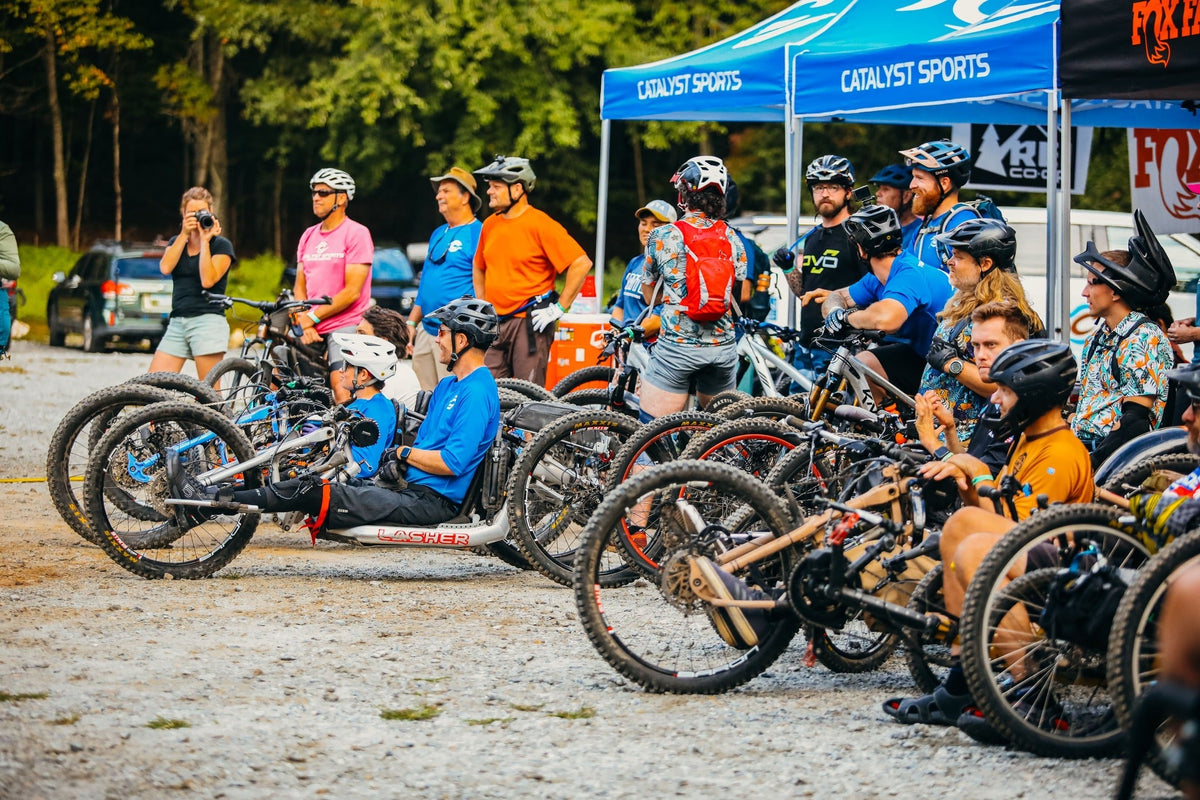

The myths, the realities, and why we believe in upside-down fork design.

Some Background...
It’s hard to understand the story behind Invert Enduro without understanding its origins and reasons for being.
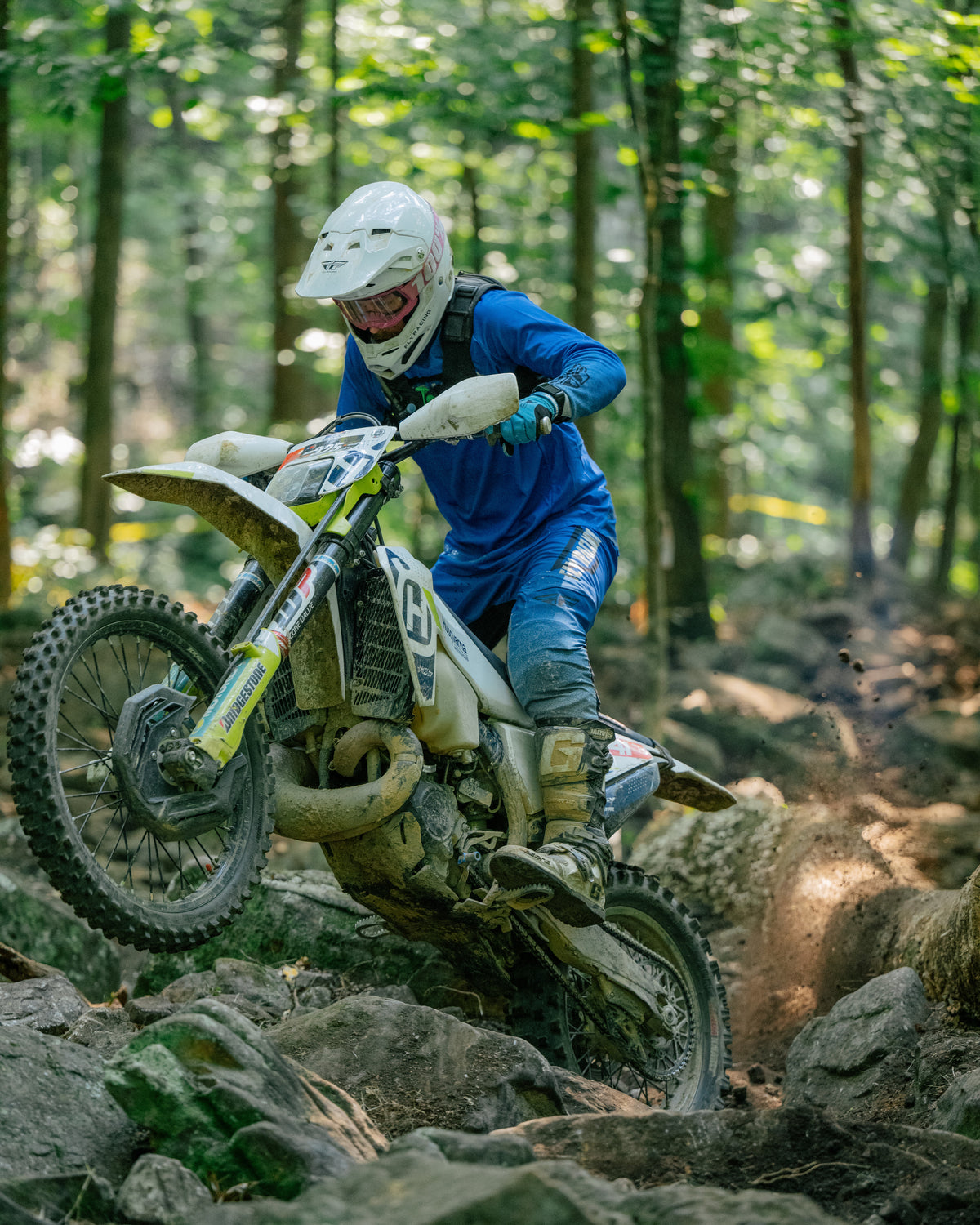
At Cane Creek, we’ve always had a love of motorcycles. We have 5 current employees who regularly ride moto and that number has recently been as big as 10. At a company that hovers around 35 people, that’s between 15% and 30% of the company. Our senior design engineer, Brandon Blakely (pictured above and left), grew up racing motocross and participates heavily in the sport to this day.
A long time ago, the world of performance motorcycles figured out that inverted forks – where the sliding stanchion tube is on the bottom – perform better. Nowadays, you can’t find a performance motorcycle or dirt bike that doesn’t have one. This is because inverted forks do two things really well: they offer a noticeably smoother ride and much better front wheel traction than conventional forks.
In this article, we'll break down those two aspects to understand how they work, as well as confront some common misunderstandings regarding inverted fork performance.
Some Background...
It’s hard to understand the story behind Invert Enduro without understanding its origins and reasons for being.
At Cane Creek, we’ve always had a love of motorcycles. We have 5 current employees who regularly ride moto and that number has recently been as big as 10. At a company that hovers around 35 people, that’s between 15% and 30% of the company. Our senior design engineer, Brandon Blakely (pictured above and left), grew up racing motocross and participates heavily in the sport to this day.
A long time ago, the world of performance motorcycles figured out that inverted forks – where the sliding stanchion tube is on the bottom – perform better. Nowadays, you can’t find a performance motorcycle or dirt bike that doesn’t have one. This is because inverted forks do two things really well: they offer a noticeably smoother ride and much better front wheel traction than conventional forks.
In this article, we'll break down those two aspects to understand how they work, as well as confront some common misunderstandings regarding inverted fork performance.
Smoothness
There are many concepts floating around that attempt to explain the smoother suspension action of inverted forks. Some, however, play a far bigger role in what riders actually feel than others. Some of these concepts are also widely misunderstood and misrepresented, so let’s clarify a few things:
1. Fore/Aft Flex
By placing the larger, stiffer tubes up top, an inverted fork better resists rearward flex. In order for a suspension fork to operate smoothly, the stanchion tube needs to be sliding into the larger tube perfectly parallel and in-plane. If the fork is flexing rearward when hitting bumps, compressions, or due to braking forces, the two tubes will bind on each other and create friction as the fork is forced to compress while not in a straight line with itself. While most modern enduro forks have a 38mm upper tube to combat this type of fore/aft flex, Invert Enduro uses a 45mm tube. That’s 19% larger, adding significantly more fore/aft support to the fork. Less flex means less bind. Less bind means less friction. Less friction means more smoothness.

2. Bushing Placement & Overlap
The second (and equal) part of the smoothness equation is the bushing placement in an Inverted fork. Nearly all suspension forks glide on bushings inside the chassis. These cylindrical, super low-friction surfaces are analogous to bearings in a wheel, but better suited to a ‘sliding-tube-in-tube' application. On an inverted fork, the lower bushing is closer to the axle, with the distance reducing even further as the fork is loaded & compressed. The shorter distance from axle to lower bushing reduces the leverage that impacts have to flex the fork rearward. On a conventional fork, the distance from axle to lower bushing is often greater, therefore increasing the leverage that impacts have to flex the fork. In this way, the lower bushing placement on Inverted forks also helps reduce friction from fork bind.
‘Bushing overlap’ describes the distance between the bushings. It tells us how well the fork is internally braced to resist binding. A fork with larger bushing overlap will have less friction as a result. Invert Enduro has more overlap than both the Helm MKII and the original Fox 38.
In addition to the smoothness offered by a stiffer chassis, both the lower bushing placement and bushing overlap on Inverted forks help reduce friction from fork bind.

3. The 'unsprung mass' argument is mostly a myth in mountain bikes.
You may have heard the very logical argument that inverted forks are more sensitive (and therefore smoother) because the mass of their lowers is less than that of a conventional fork. Simple physics tells us that it takes less force to accelerate a smaller mass, so a fork with lighter lowers should move and react to bumps more sensitively. This concept likely comes from the motorcycle world, where forks with cast lowers perhaps do weigh more, especially in the past. The reality is that the magnesium castings used for modern mtb fork lowers are very, very light. In fact, the magnesium casting of a modern enduro fork, with all constituent parts that attach directly to it, is lighter than the complete lower assembly of our Invert Enduro. So, Invert Enduro has more unsprung mass – yet it still rides noticeably smoother!
This proves that there must be something else causing this performance gain.

4. The location of wiper seals also doesn't matter much.
Another common myth regarding inverted forks is the location of the wiper seals. It’s often claimed that inverted forks use gravity to hold the lubricating fork oil against the wiper seals, keeping the stanchions sliding with minimal friction. While this concept is true while the fork is sitting still at rest, the minute it gets moving, oil is easily splashed and circulated throughout. Once this oil circulation is activated by riding down a trail, conventional forks have foam rings that hold oil where it needs to be at the wiper. Believe us, if conventional forks weren’t adequately self-lubricating, you would know it!

Increased Traction
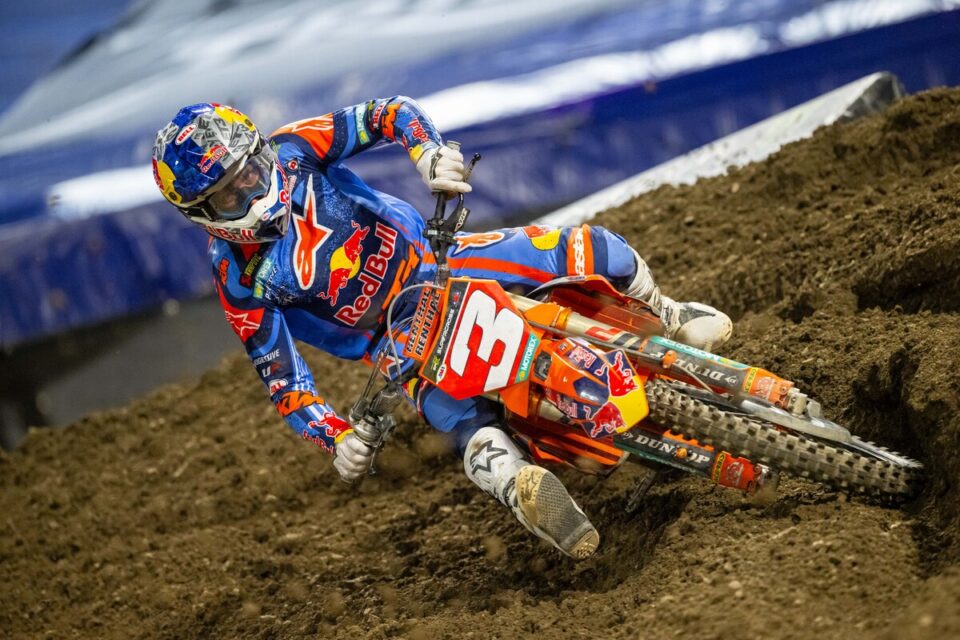
Eli Tomac, one of the greatest motocross racers of our time, recently switched teams to race for the Austrian motorcycle manufacturer, KTM. One of the most interesting stories of this move was Tomac’s transition to a bike built with a steel frame, instead of the overly stiff aluminum frames he has raced for his entire professional career. After the first several races of the 2026 season, Eli commented on the “planted” feel of the steel-framed bike, describing his instant success finding additional grip and confidence. He’s already won four times on the new frame.
What do we have to learn from Tomac’s success? Well, for decades, the mountain bike industry has had an obsession with stiffness. Stiffer components are believed to be more efficient, faster, more confidence-inspiring, and a pre-requisite for hard-charging riding. Much of this is true, but as we say at Cane Creek, ‘too much of a good thing is too much!'
Lately, we’re finding that good, engineered flex – if executed correctly – can be a huge performance booster. It makes bikes more comfortable, filters harsh vibrations and chatter that tire us out, and helps the bike swim – not skip – through rough sections of trail.
moto photo: https://mxvice.com/2026/04/23/eli-tomac-out-for-supercross-philadelphia/
Eli Tomac, one of the greatest motocross racers of our time, recently switched teams to race for the Austrian motorcycle manufacturer, KTM. One of the most interesting stories of this move was Tomac’s transition to a bike built with a steel frame, instead of the overly stiff aluminum frames he has raced for his entire professional career. After the first several races of the 2026 season, Eli commented on the “planted” feel of the steel-framed bike, describing his instant success finding additional grip and confidence. He’s already won four times on the new frame.
What do we have to learn from Tomac’s success? Well, for decades, the mountain bike industry has had an obsession with stiffness. Stiffer components are believed to be more efficient, faster, more confidence-inspiring, and a pre-requisite for hard-charging riding. Much of this is true, but as we say at Cane Creek, ‘too much of a good thing is too much!'
Lately, we’re finding that good, engineered flex – if executed correctly – can be a huge performance booster. It makes bikes more comfortable, filters harsh vibrations and chatter that tire us out, and helps the bike swim – not skip – through rough sections of trail.
moto photo: https://mxvice.com/2026/04/23/eli-tomac-out-for-supercross-philadelphia/
When riders get on an inverted fork, they instantly feel that it’s easier to hold a line through rough and off-camber sections where one would typically expect the front wheel to slide out. This is perhaps where the real magic of inverted forks lies. While they are stiffer than conventional forks in the fore/aft direction, inverted forks tend to offer more torsional flex. (Torsional flex could also be described in simpler terms as 'twisting side-to-side.')
While often vilified by the court of popular opinion*, torsional flex can be a good thing and offers significant benefit by allowing the wheel to track and maintain traction over rough, uneven, and off-camber ground. As with Goldilocks' porridge – and all things in life – there’s a balance. The amount of torsional flex needs to be just right; not too much, not too little. With Invert Enduro, the majority of our R&D effort went into tuning the fork's flex characteristics. Thanks to our SquareLoc axle system, Invert Enduro is the stiffest single crown inverted fork on the market – making it feel more precise and more directionally confident than others in its class. That said, it still preserves the magical traction and ‘good flex’ that we believe inverted forks should offer.
*To the credit of many product reviewers and riders over the years, past attempts at inverted mountain bike forks have indeed had a LOT of torsional flexion, limiting their mass appeal. We would agree and feel confident that Invert Enduro is better (torsionally stiffer) than any single crown inverted fork that has come before it.
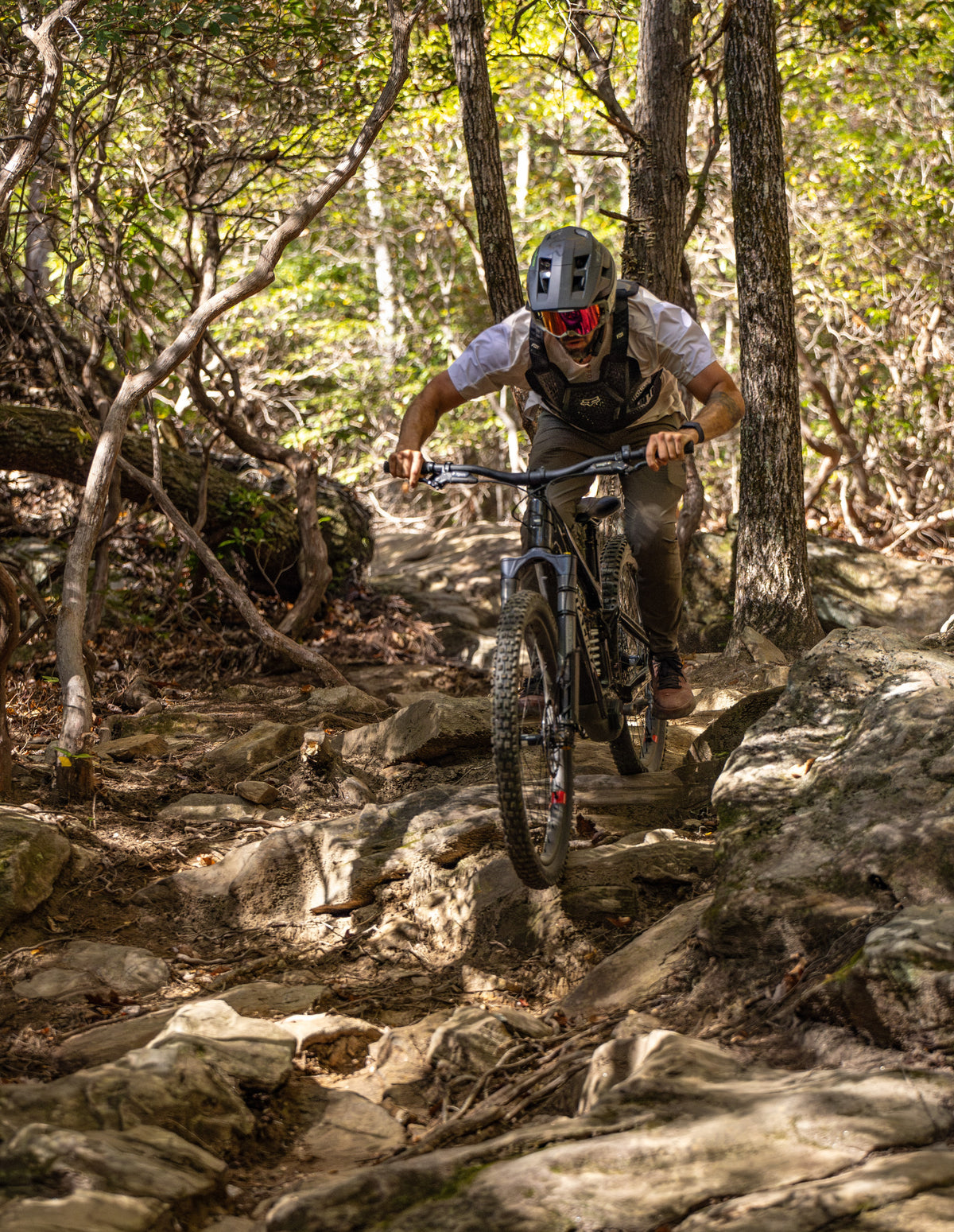
When riders get on an inverted fork, they instantly feel that it’s easier to hold a line through rough and off-camber sections where one would typically expect the front wheel to slide out. This is perhaps where the real magic of inverted forks lies. While they are stiffer than conventional forks in the fore/aft direction, inverted forks tend to offer more torsional flex. (Torsional flex could also be described in simpler terms as 'twisting side-to-side.')
While often vilified by the court of popular opinion*, torsional flex can be a good thing and offers significant benefit by allowing the wheel to track and maintain traction over rough, uneven, and off-camber ground. As with Goldilocks' porridge – and all things in life – there’s a balance. The amount of torsional flex needs to be just right; not too much, not too little. With Invert Enduro, the majority of our R&D effort went into tuning the fork's flex characteristics. Thanks to our SquareLoc axle system, Invert Enduro is the stiffest single crown inverted fork on the market – making it feel more precise and more directionally confident than others in its class. That said, it still preserves the magical traction and ‘good flex’ that we believe inverted forks should offer.
*To the credit of many product reviewers and riders over the years, past attempts at inverted mountain bike forks have indeed had a LOT of torsional flexion, limiting their mass appeal. We would agree and feel confident that Invert Enduro is better (torsionally stiffer) than any single crown inverted fork that has come before it.
Interested in purchasing Invert Enduro?