The origin story of the Invert Enduro fork
Why Inverted?
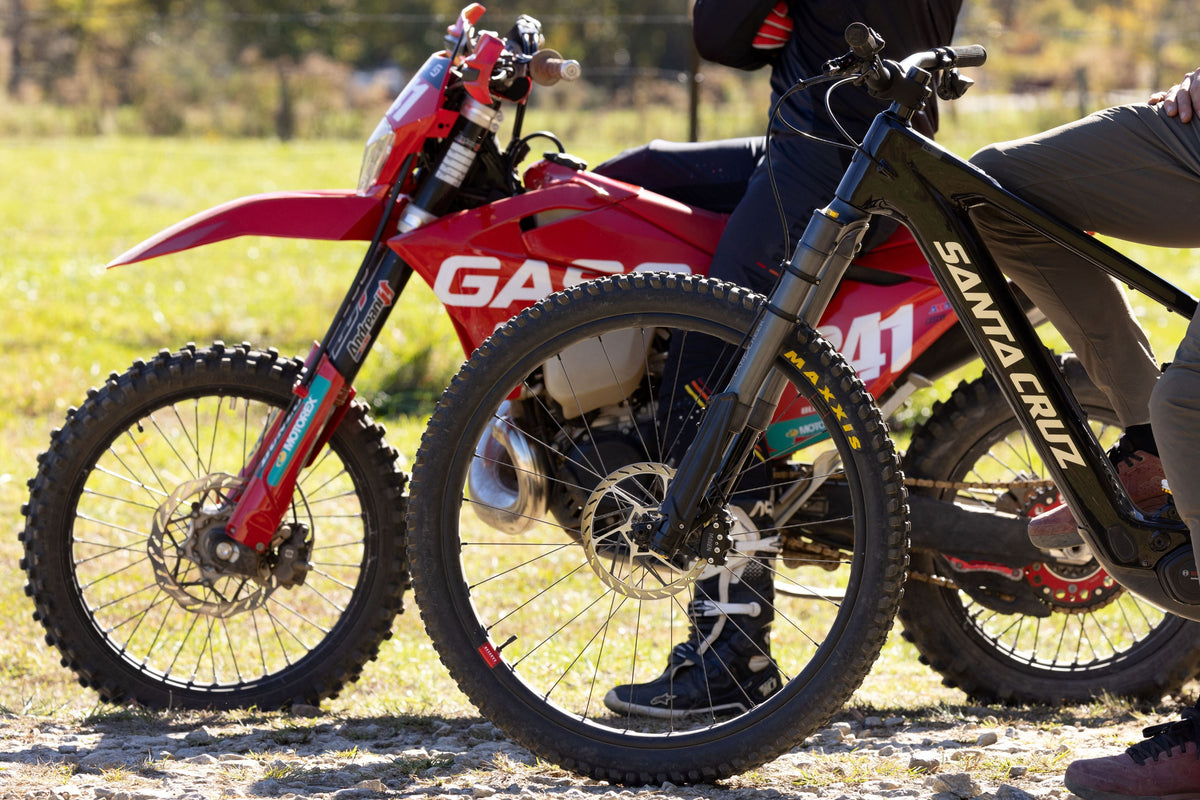
The reasons behind why we chose to pursue an inverted mountain bike fork are covered in depth in this previous article. Put simply, inverted forks offer a smoother ride and increased traction. These advantages are proven to us daily by our shared passion for motorcycles – where inverted forks are synonymous with high performance. Inverted forks for mountain bikes have been attempted many times over the decades, but have struggled to gain mainstream appeal. Most of that has to do with concerns about weight, chassis performance, and aesthetics. As modern gravity riders have become less concerned with counting grams, we saw real opportunity to revisit the inverted concept, thinking that we could address the chassis performance and aesthetics head on. Our work on Invert Gravel has shown us that there is indeed a magical ride quality that inverted forks offer and we plan to continue our work in this space with other fork projects going forward.
Testing Tube Diameters
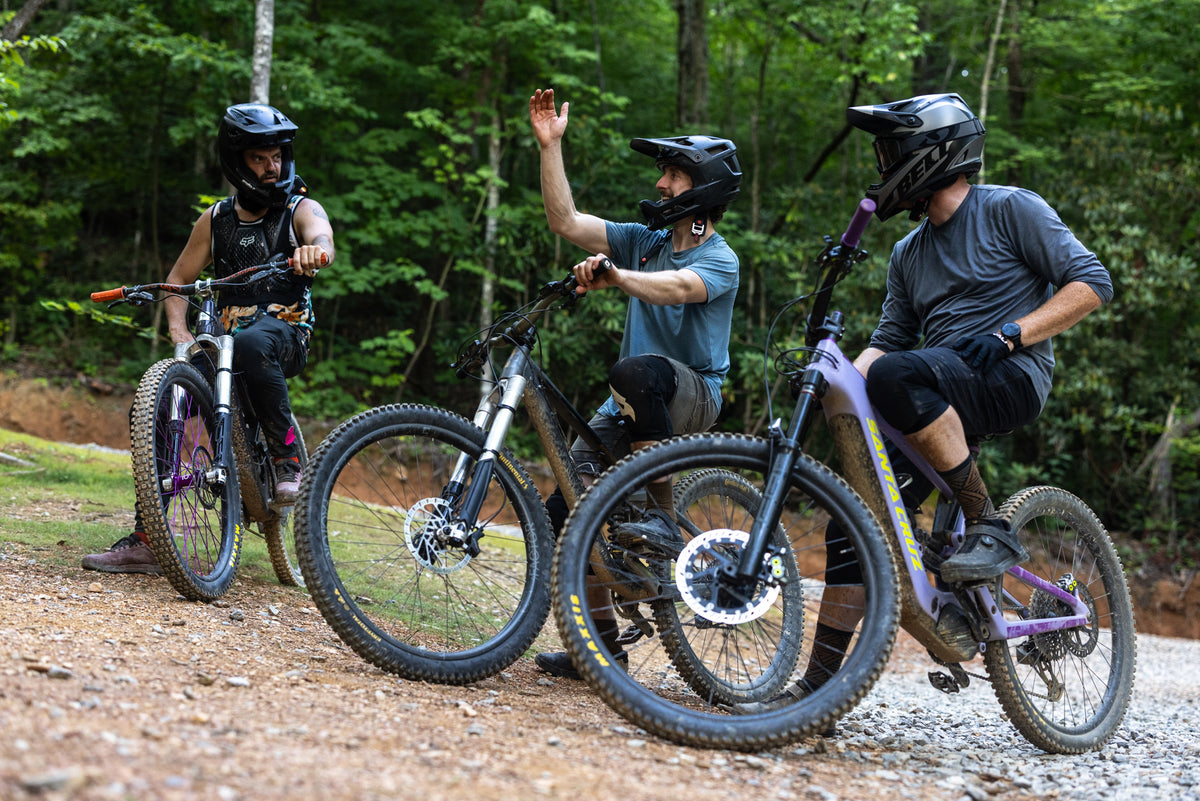
The first major decision of Invert Enduro was to determine the basic chassis dimensions. As you are likely aware, the tube diameters used in the upper and lower sections of a fork determine a large portion of the fork’s performance and feel. In February 2024, we started by benchmarking the ride quality of competitor enduro forks to gauge which one rode the most confidently. We rode all the top long travel forks (inverted and conventional) alongside our own Helm MKII in a back-to-back test at nearby Ride Rock Creek bike park. We unanimously decided that we wanted to develop an inverted fork that offered the confident directional precision of conventional forks, with the smooth tracking action that inverted ones are known for.
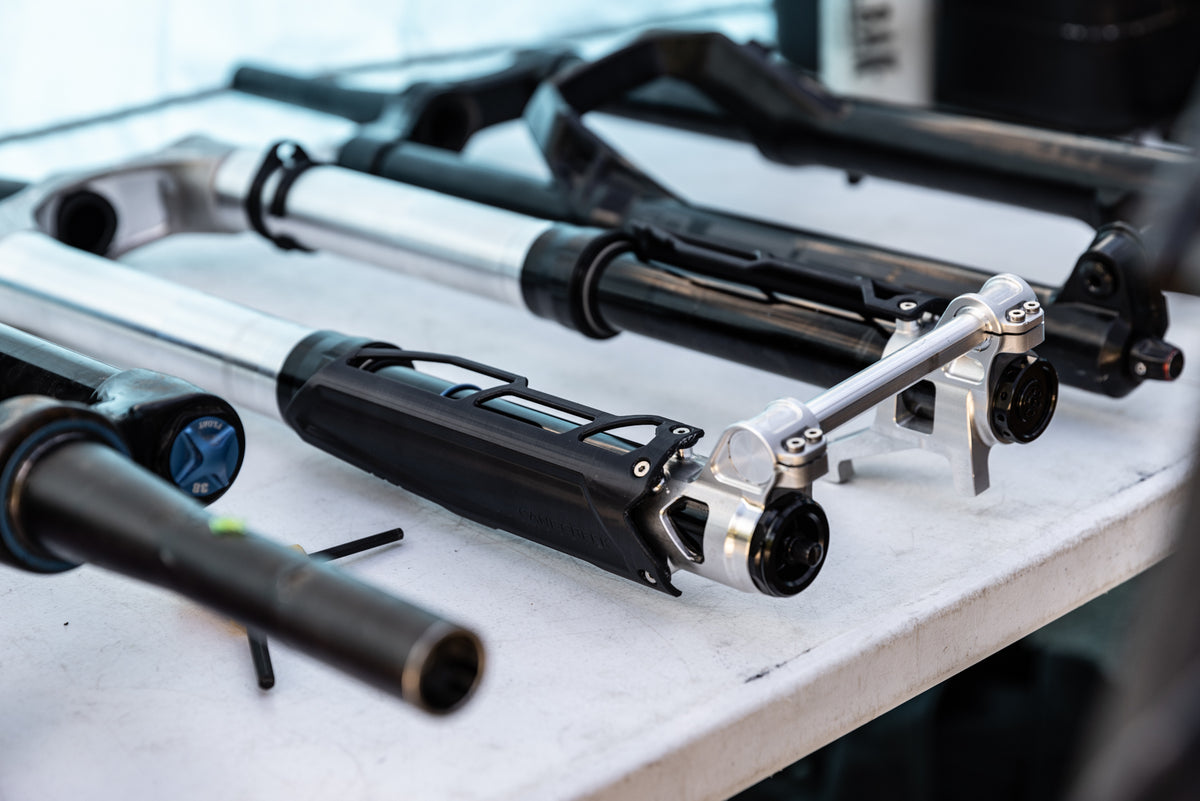
We knew that the first and major hurdle would be to build a fork that offered torsional stiffness numbers close to that of conventional 38mm enduro forks. In engineering, a common practice is to overshoot and then rein in a design. So, to start, we went big. We designed the first prototypes around a 40mm stanchion tube. That’s the same size used commonly by dual-crown downhill forks. That 40mm lower tube was housed in a 52mm upper tube. This early prototype was a monster and possibly one of the burliest single crown mountain bike forks ever made! However, this chassis taught us a very valuable lesson: bigger is not always better and stiffer is not always better.
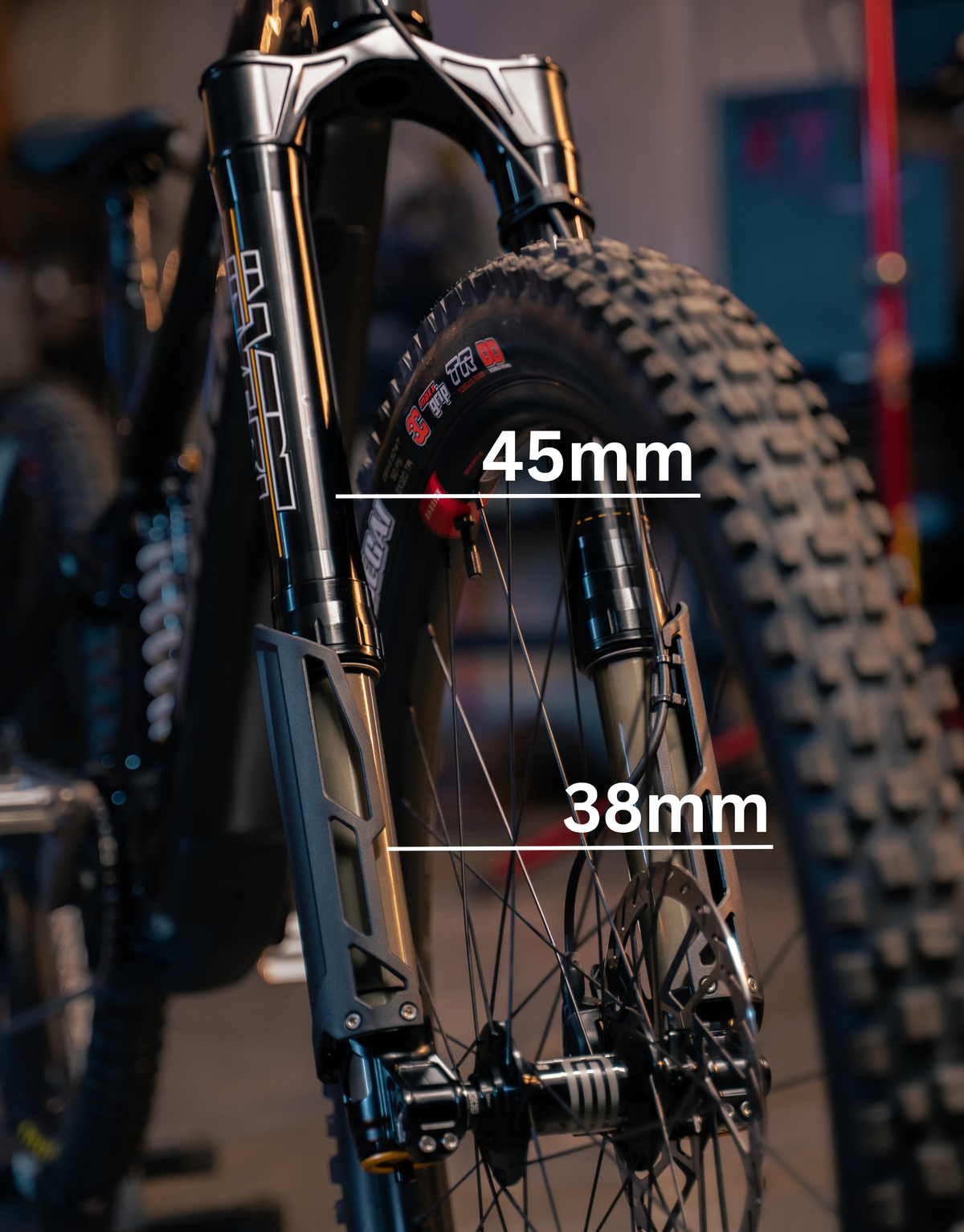
When forces are put through any component, they have to go somewhere. The 52/40mm chassis was so stiff that it wasn’t passing initial drop tests. To clarify, the fork itself was doing just fine – but the headset bearings in the test jig were exploding! With such a stiff, rigid chassis, 100% of the impact force was being transmitted through the fork and into the headset. We broke multiple bearings and bent a few steerer tubes along the way. It was obvious that we had surpassed the upper limit of what inverted single crown dimensions should be. We decided to step down to a 38mm stanchion tube and a 45mm upper tube. This would ensure an appropriate amount of give in the fork, spreading impact loads over the entire length, instead of transmitting 100% of them into the headset (or worse, the bike frame!)
Testing Tube Diameters
The first major decision of Invert Enduro was to determine the basic chassis dimensions. As you are likely aware, the tube diameters used in the upper and lower sections of a fork determine a large portion of the fork’s performance and feel. In February 2024, we started by benchmarking the ride quality of competitor enduro forks to gauge which one rode the most confidently. We rode all the top long travel forks (inverted and conventional) alongside our own Helm MKII in a back-to-back test at nearby Ride Rock Creek bike park. We unanimously decided that we wanted to develop an inverted fork that offered the confident directional precision of conventional forks, with the smooth tracking action that inverted ones are known for.
We knew that the first and major hurdle would be to build a fork that offered torsional stiffness numbers close to that of conventional 38mm enduro forks. In engineering, a common practice is to overshoot and then rein in a design. So, to start, we went big. We designed the first prototypes around a 40mm stanchion tube. That’s the same size used commonly by dual-crown downhill forks. That 40mm lower tube was housed in a 52mm upper tube. This early prototype was a monster and possibly one of the burliest single crown mountain bike forks ever made! However, this chassis taught us a very valuable lesson: bigger is not always better and stiffer is not always better.
When forces are put through any component, they have to go somewhere. The 52/40mm chassis was so stiff that it wasn’t passing initial drop tests. To clarify, the fork itself was doing just fine – but the headset bearings in the test jig were exploding! With such a stiff, rigid chassis, 100% of the impact force was being transmitted through the fork and into the headset. We broke multiple bearings and bent a few steerer tubes along the way. It was obvious that we had surpassed the upper limit of what inverted single crown dimensions should be. We decided to step down to a 38mm stanchion tube and a 45mm upper tube. This would ensure an appropriate amount of give in the fork, spreading impact loads over the entire length, instead of transmitting 100% of them into the headset (or worse, the bike frame!)


The vertical drop test is one of the most abusive and important tests for forks.
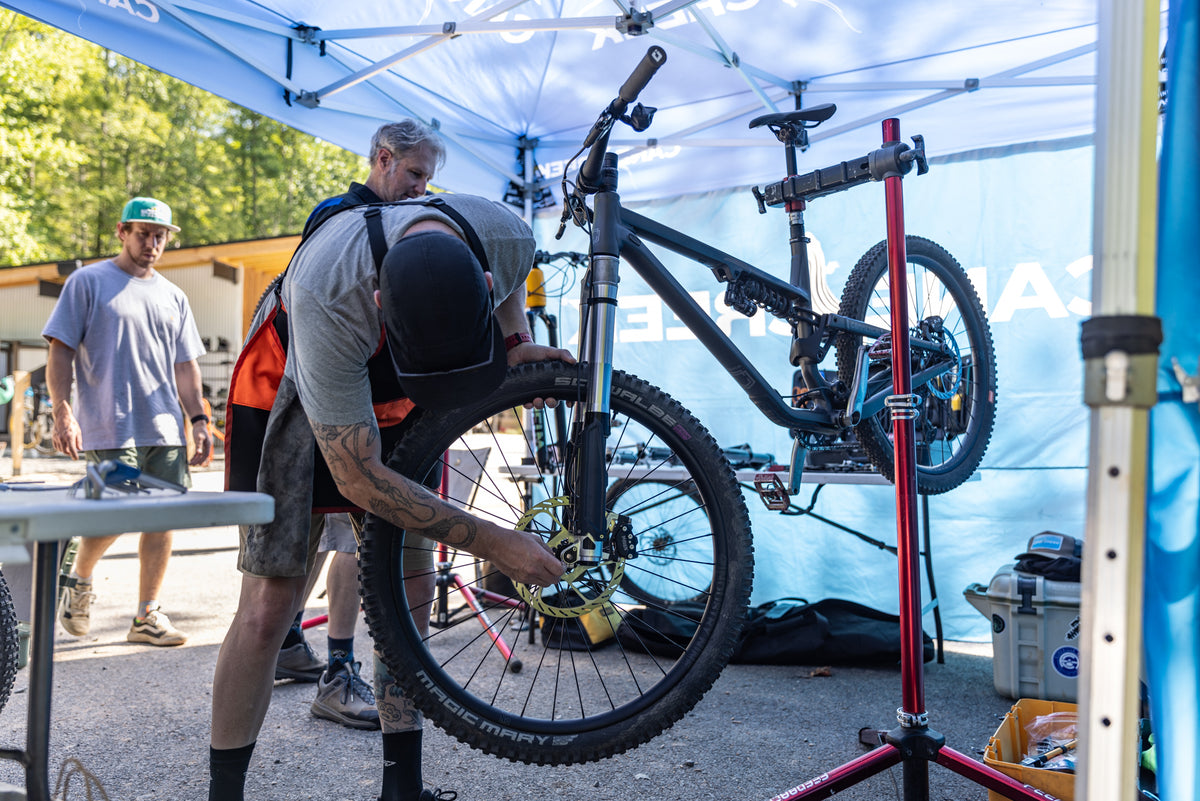
In this guillotine-like fixture, a heavy weight is dropped on the end of the fork to simulate an intense frontal impact. Senior Design Engineer Brandon Blakely measures fork deflection with each increasing drop height. Parameters for this and many other lab tests are outlined by the ISO – the international product safety organization that outlines test protocol to ensure that bike parts are as safe as possible. With any Cane Creek product, we expect to see our designs go far beyond the minimum requirements.


Designing SideSwipe
No matter how you slice it, all inverted forks need stanchion guards. With the sliding stanchion tubes at the bottom, they are much more susceptible to being damaged from contact with debris while riding, crashes, transport, and storage. This is true in moto and true for mountain bike. However, the guards are one area in which we thought the moto inspiration is being taken too literally on other inverted MTB forks. Dirt bikes have to contend with roost – a mixture of dirt and rocks being flung backwards at high speed by the bikes in front. This is not a problem that mountain bikes face. Additionally, there was a major aesthetic concern. We felt strongly that inverted fork guards on MTB look bulky. They add a huge chunk of visual weight to the bottom of the fork and detract from the sleek and sexy lines that we're used to seeing. It was important to us to make Invert Enduro look lean and mean, so that it would fit aesthetically with a bicycle application.
We set out to research how and where mountain bike forks actually get damaged so that we could design a more minimal guard that would cover only the area that was necessary.
Designing SideSwipe
No matter how you slice it, all inverted forks need stanchion guards. With the sliding stanchion tubes at the bottom, they are much more susceptible to being damaged from contact with debris while riding, crashes, transport, and storage. This is true in moto and true for mountain bike. However, the guards are one area in which we thought the moto inspiration is being taken too literally on other inverted MTB forks. Dirt bikes have to contend with roost – a mixture of dirt and rocks being flung backwards at high speed by the bikes in front. This is not a problem that mountain bikes face. Additionally, there was a major aesthetic concern. We felt strongly that inverted fork guards on MTB look bulky. They add a huge chunk of visual weight to the bottom of the fork and detract from the sleek and sexy lines that we're used to seeing. It was important to us to make Invert Enduro look lean and mean, so that it would fit aesthetically with a bicycle application.
We set out to research how and where mountain bike forks actually get damaged so that we could design a more minimal guard that would cover only the area that was necessary.
We gathered data from over 70 real-world bikes and found that MTB forks just don’t get scratched on the front of the lowers. Damage is concentrated on the sides.
From that point, we dove into the industrial design (visual aspect). Countless sketches and paper models were created and we settled on one that had an angular, almost knife-like shape with large windows in the front side to allow the beauty of the stanchion tube to be easily seen.


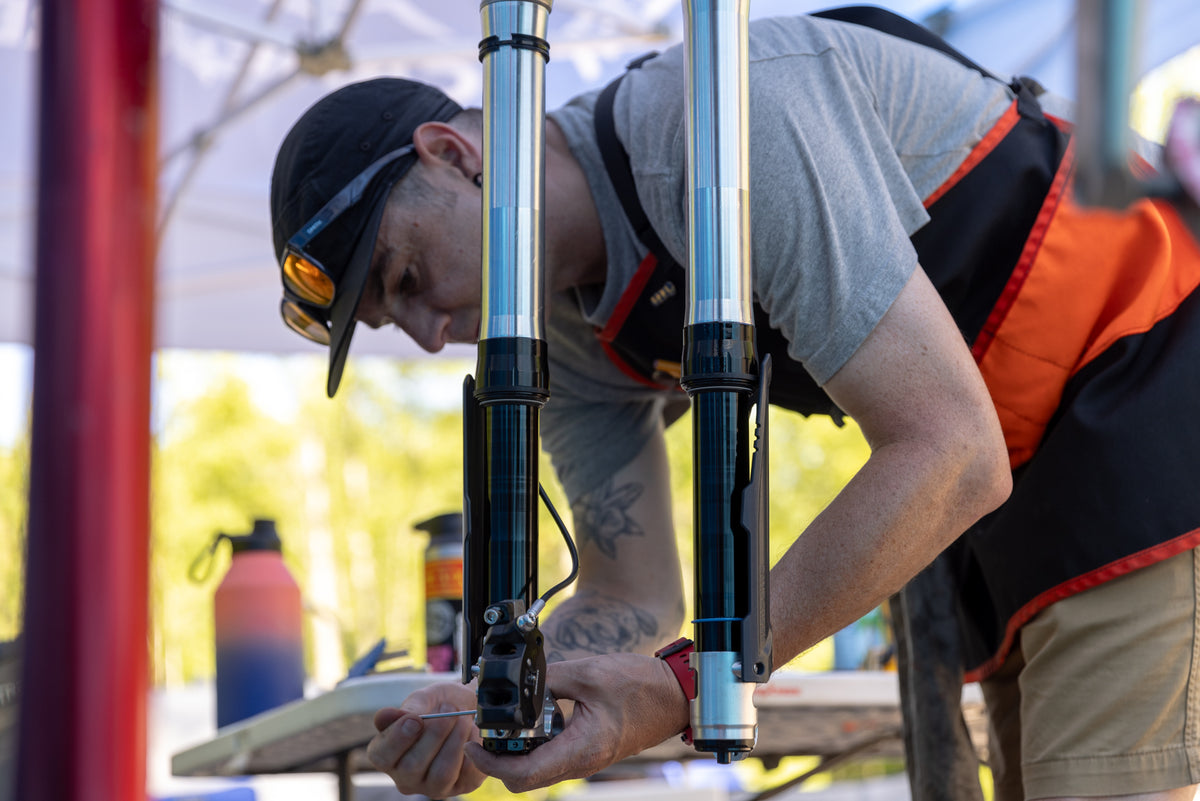
Inverted forks need a way to push the brake hose up and away from the spokes of the front wheel during compression. Many competitor designs have an extra armature mounted to the dropout that drives the brake hose, but we wanted to reduce redundant parts and simplify our design, both visually and functionally. We spent a fair amount of time dialing in the hose routing, particularly how it could attach to the guard so that we could ditch the extra piece. We explored various methods of clamping/securing the hose, but settled on a zip tie method for simplicity, reliability, and low cost.
Many rounds of prototypes were needed. In fact, this was the area of development where we most heavily relied on our 3D printers to make rapid, functional prototypes. We rode with 3D-printed guards for most of the development period until we finalized the cable routing. The final production SideSwipe guard is a heavy duty, injection-molded plastic. Durable, lightweight, stiff, and cost-effective.
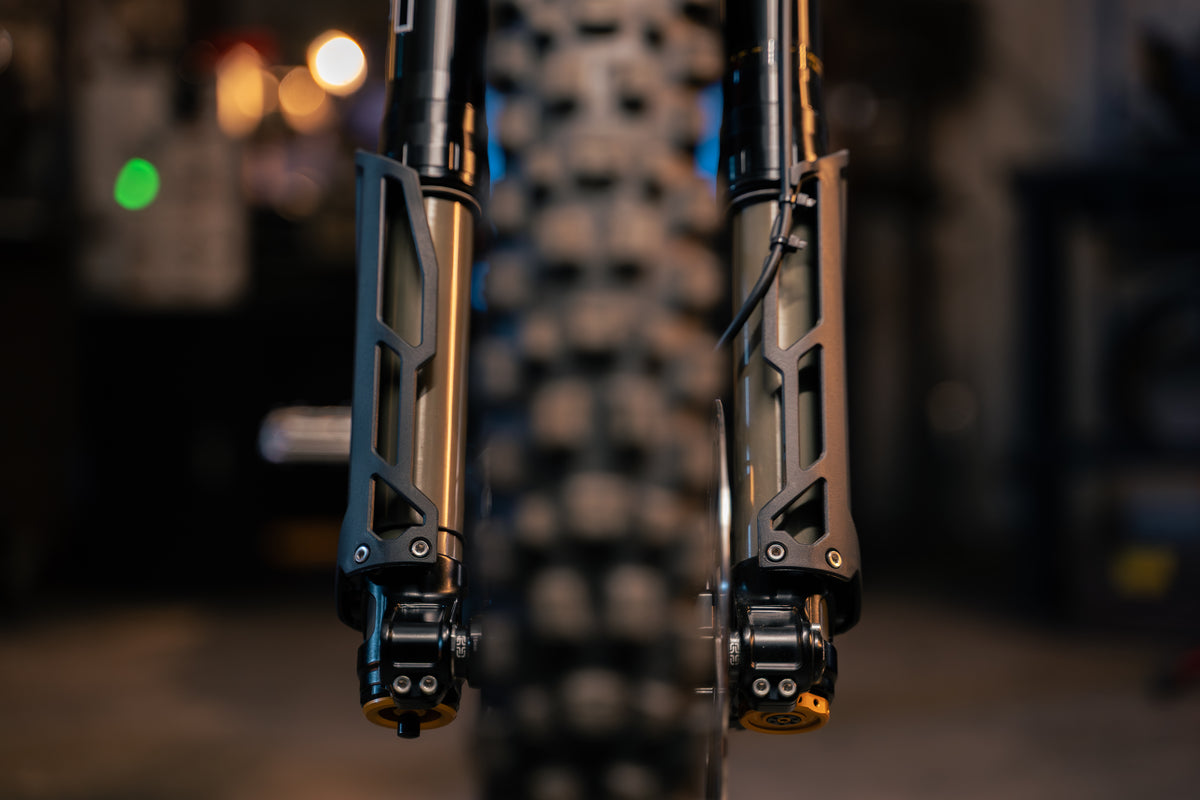
Inverted forks need a way to push the brake hose up and away from the spokes of the front wheel during compression. Many competitor designs have an extra armature mounted to the dropout that drives the brake hose, but we wanted to reduce redundant parts and simplify our design, both visually and functionally. We spent a fair amount of time dialing in the hose routing, particularly how it could attach to the guard so that we could ditch the extra piece. We explored various methods of clamping/securing the hose, but settled on a zip tie method for simplicity, reliability, and low cost.
Many rounds of prototypes were needed. In fact, this was the area of development where we most heavily relied on our 3D printers to make rapid, functional prototypes. We rode with 3D-printed guards for most of the development period until we finalized the cable routing. The final production SideSwipe guard is a heavy duty, injection-molded plastic. Durable, lightweight, stiff, and cost-effective.

Tuning the Twist
We knew that getting the torsional stiffness (engineering speak for ‘resistance to twist’) right on Invert Enduro would make or break the success of the product. Without a lower arch connecting the two legs, inverted forks have historically struggled to provide a ride quality that’s as confident and predictable as that of a conventional fork. No matter how fancy the air spring, damper, or other internal aspects are, if you don’t have a sufficiently stiff chassis, the fork won’t work well. But here’s the catch: part of the magic of inverted forks is the smoothness and traction that flex delivers! The key was to find balance. We needed enough stiffness for confident handling, with just enough flex for additional traction and smoothness.
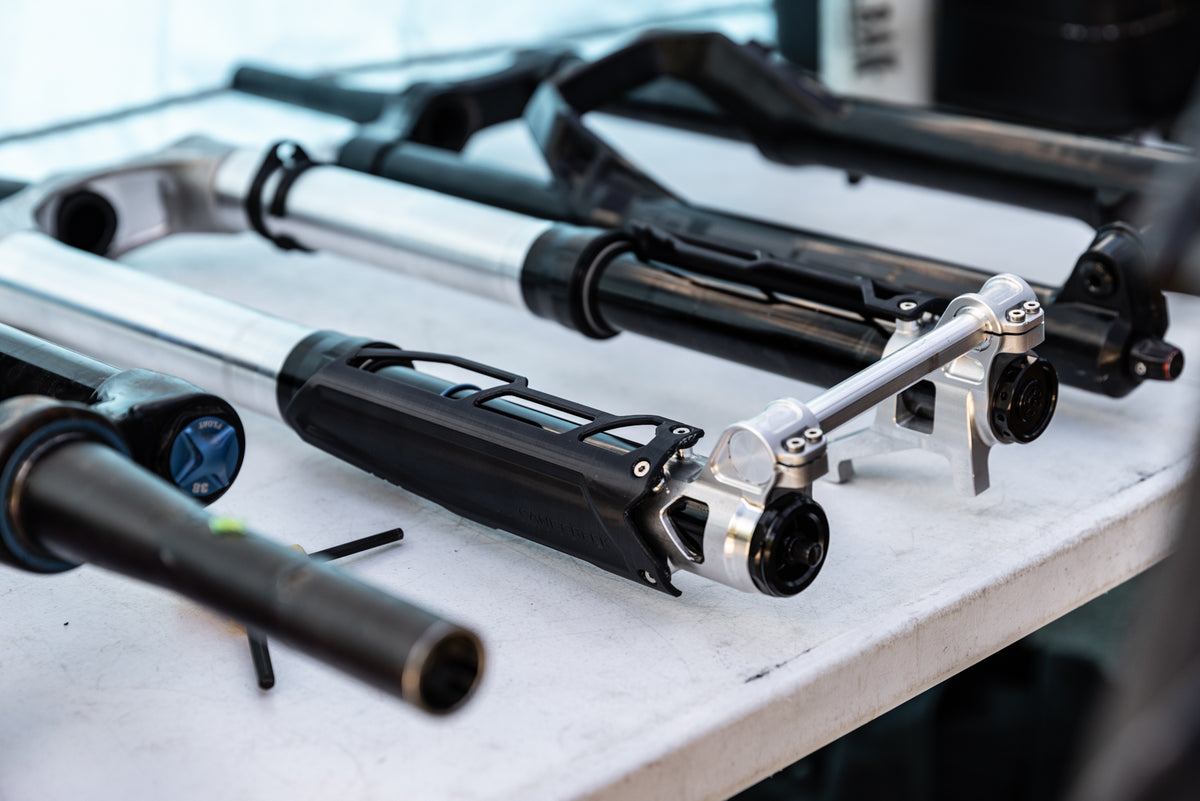
After building as stout a crown and upper tube as we felt we could, we turned our attention to the axle. Ride testing revealed that a large part of the ride feel and chassis performance was controlled by the axle and dropouts. We figured this could be a place to further increase (and fine tune) the torsional stiffness. We spent the better part of a year on the axle and dropout design — one of the largest pieces of the fork's development.
Enter: the keyed axle.
Tuning the Twist
We knew that getting the torsional stiffness (engineering speak for ‘resistance to twist’) right on Invert Enduro would make or break the success of the product. Without a lower arch connecting the two legs, inverted forks have historically struggled to provide a ride quality that’s as confident and predictable as that of a conventional fork. No matter how fancy the air spring, damper, or other internal aspects are, if you don’t have a sufficiently stiff chassis, the fork won’t work well. But here’s the catch: part of the magic of inverted forks is the smoothness and traction that flex delivers! The key was to find balance. We needed enough stiffness for confident handling, with just enough flex for additional traction and smoothness.
After building as stout a crown and upper tube as we felt we could, we turned our attention to the axle. Ride testing revealed that a large part of the ride feel and chassis performance was controlled by the axle and dropouts. We figured this could be a place to further increase (and fine tune) the torsional stiffness. We spent the better part of a year on the axle and dropout design — one of the largest pieces of the fork's development.
Enter: the keyed axle.


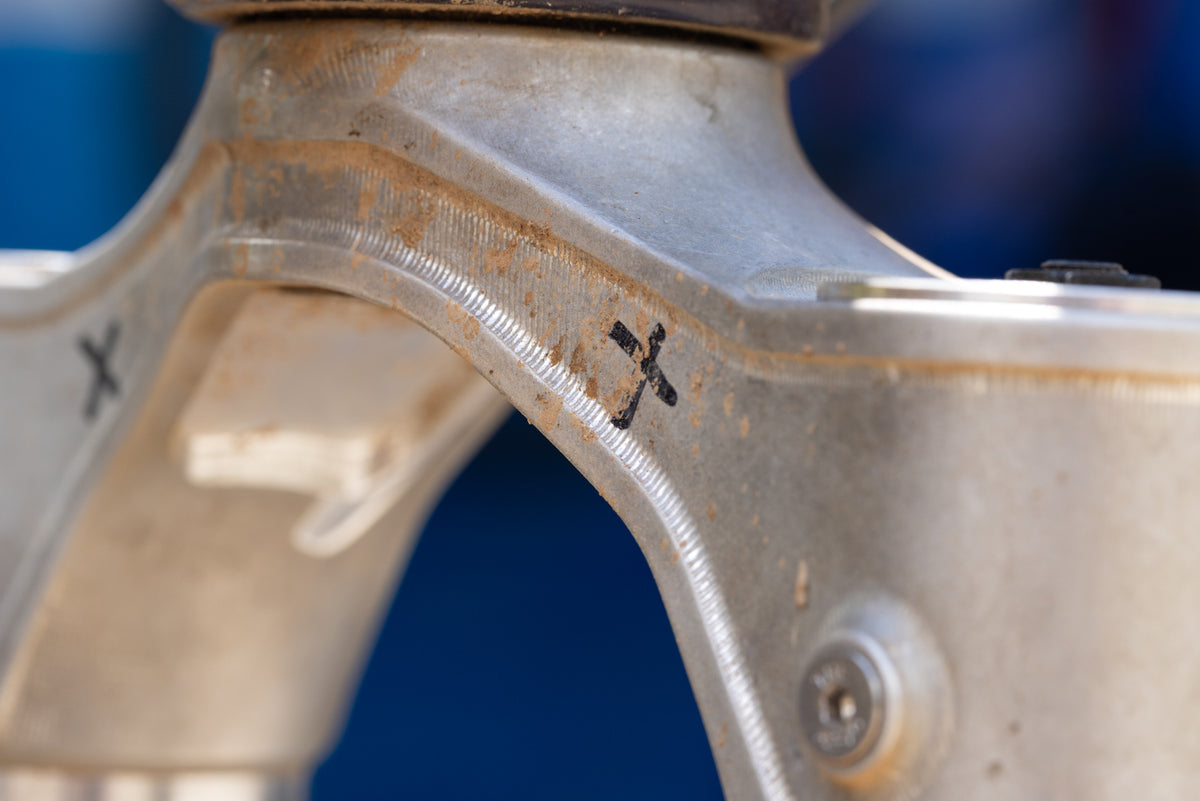
It’s customary for inverted forks to use pinch bolts to help secure axles, but recently, most inverted forks have used round axles that fit into round holes in the dropouts. A round axle is simple to make, easy to use, and frankly, more of the obvious choice. At Cane Creek however, we’ve been using keyed axles in our Helm fork since its introduction for the added resistance to twisting that they provide. Instead of being round, the axle uses flat sections that plug into corresponding flats in the dropout. This helps somewhat in Helm, but it doesn't stop axle movement entirely. If you are to then secure this non-round axle with pinch bolts, it completely freezes the axle in the dropout and prevents any possible twisting or rotating. This is how we would proceed with Invert.
In exploring how and why inverted forks twist under load, we dissected some inverted competitors and tested the force required to make the axle slip (rotate) in the dropout. Even when pinched to manufacturer spec, it requires very little force to overcome the pinch bolts and cause a round axle to slip. From our early benchmarking, we knew that Invert Enduro needed to have significantly less twist than other inverted forks that have come before if it was going to succeed. In order to shore up the connection between axle and dropout, we decided to carry forward the keyed axle concept.


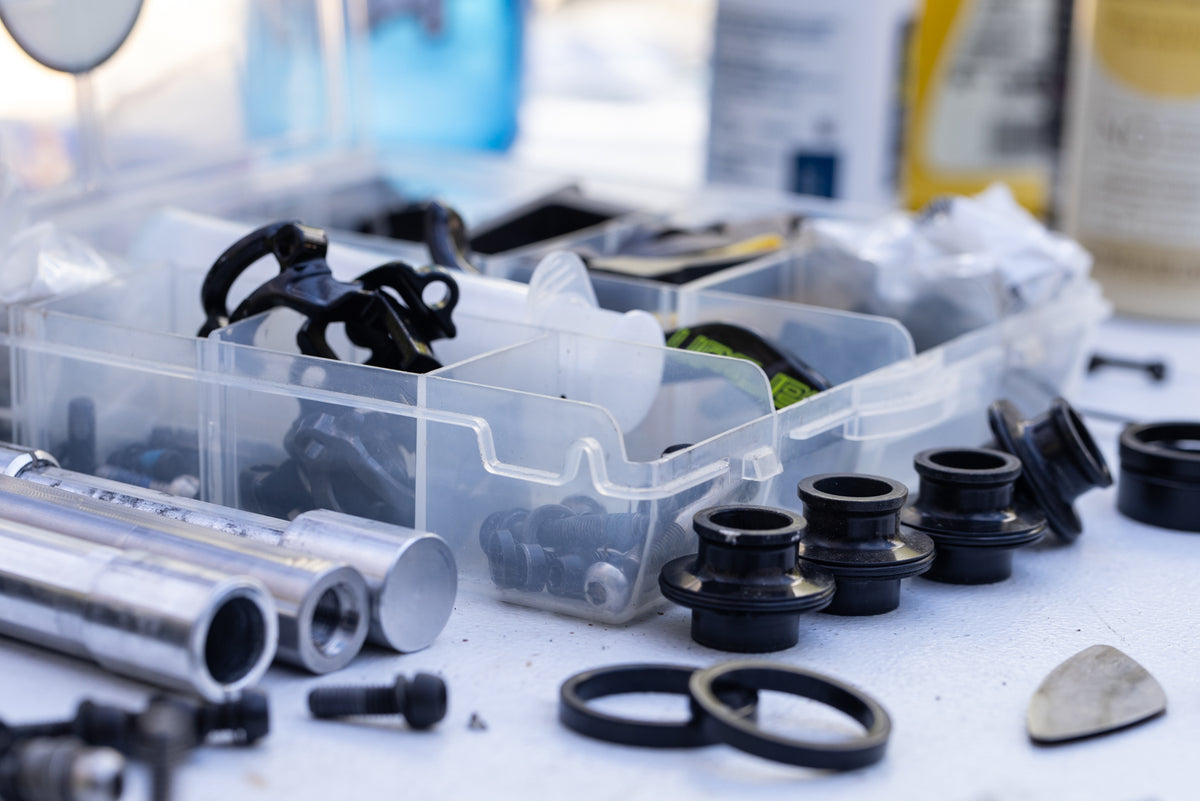
Second to the external shape of the axle is the material and cross section. We prototyped axles of various metals in both solid and hollow variations to see which provided the most stiffness. We tested both aluminum and steel, settling on 17-4 pre-hardened stainless steel. This particular metal offered the most stiffness and best ride quality, even more so than titanium! It's a very expensive metal and difficult/time consuming to work with from a manufacturing standpoint, but we felt that the performance was worth it. The additional stiffness that the pre-hard stainless axle offered gave the ride quality we felt had been lacking in the other inverted options.
We added a fourth flat side to the D-shaped axle from Helm, and with that, SquareLoc was born.
SquareLoc
SquareLoc’s ultimate stiffness and security allows us to offer the more common 15mm axle size and still have a fork with less twist than any of our competitors*. This was a huge deal to us, as we wanted to remove as many hurdles as possible in helping get riders on an inverted fork. (Others in the current inverted space have required riders to adopt the larger 20mm axle standard, which often forces them to acquire a different front wheel or hub.)

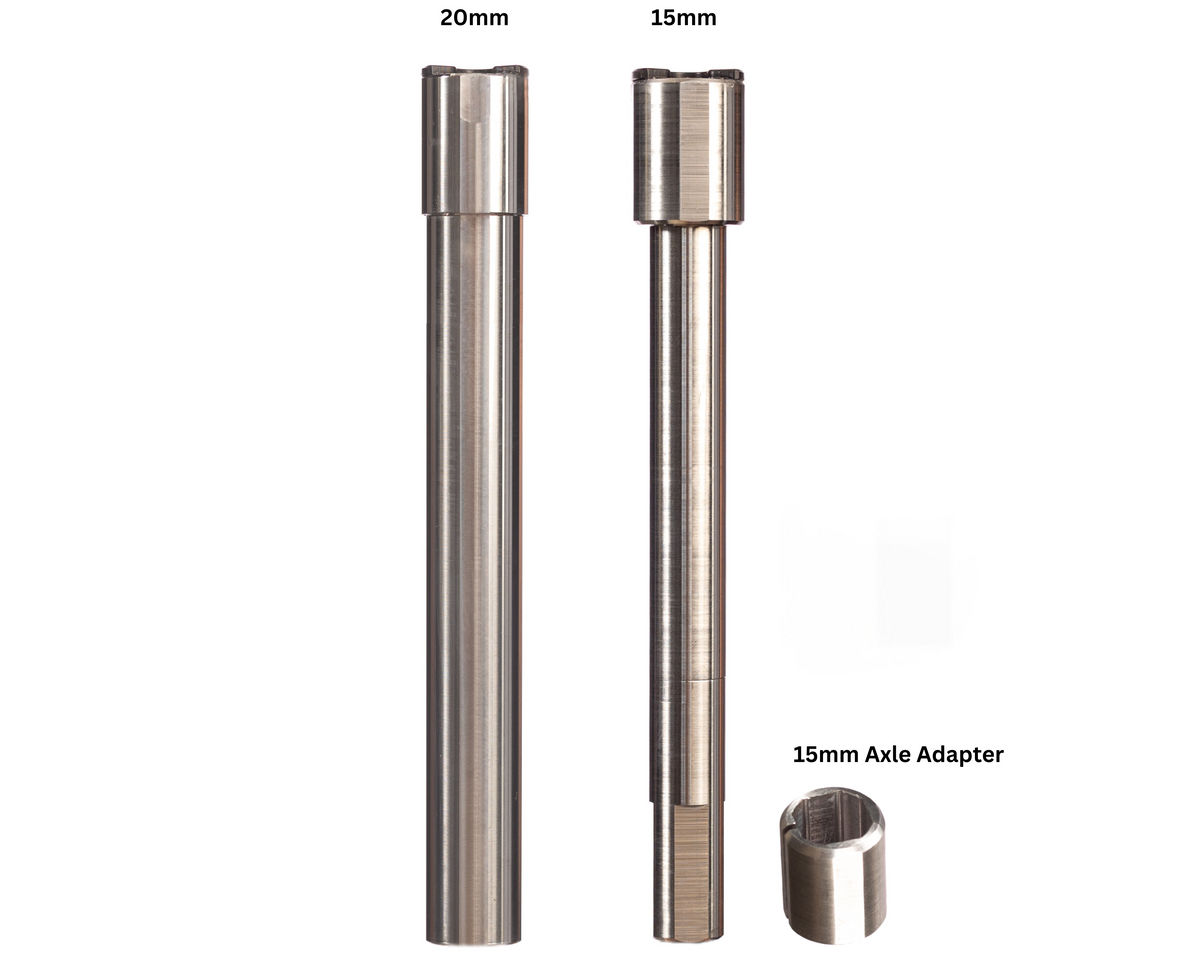
We spent months riding both our 15mm and 20mm SquareLoc axle and ultimately decided that the 15mm version was sufficient for most riders in most scenarios. As such, it's the stock option that comes with Invert, making it simple and easy to plug the fork into the bike and wheelset you already own.
That said, the 20mm option adds even more torsional stiffness for the most aggressive riders. This translates to a bit more directional confidence in the front end for riders that want as little fork twist as possible. It’s a more direct and precise ride feel and one more similar to the handling characteristic of a conventional enduro fork, like a 38 or Zeb.
In this way, Invert Enduro offers a tunable chassis, wherein riders can choose exactly how much flex their Invert exhibits. The 15mm setup is more comfortable for lighter riders, rides smoother, and offers a bit more traction on tricky tech trails. The 20mm setup is more rigid, direct, and precise feeling – qualities that are sometimes appreciated at higher overall speeds, or under heavier riders.
We spent months riding both our 15mm and 20mm SquareLoc axle and ultimately decided that the 15mm version was sufficient for most riders in most scenarios. As such, it's the stock option that comes with Invert, making it simple and easy to plug the fork into the bike and wheelset you already own.
That said, the 20mm option adds even more torsional stiffness for the most aggressive riders. This translates to a bit more directional confidence in the front end for riders that want as little fork twist as possible. It’s a more direct and precise ride feel and one more similar to the handling characteristic of a conventional enduro fork, like a 38 or Zeb.
In this way, Invert Enduro offers a tunable chassis, wherein riders can choose exactly how much flex their Invert exhibits. The 15mm setup is more comfortable for lighter riders, rides smoother, and offers a bit more traction on tricky tech trails. The 20mm setup is more rigid, direct, and precise feeling – qualities that are sometimes appreciated at higher overall speeds, or under heavier riders.
From the Southeast to British Columbia
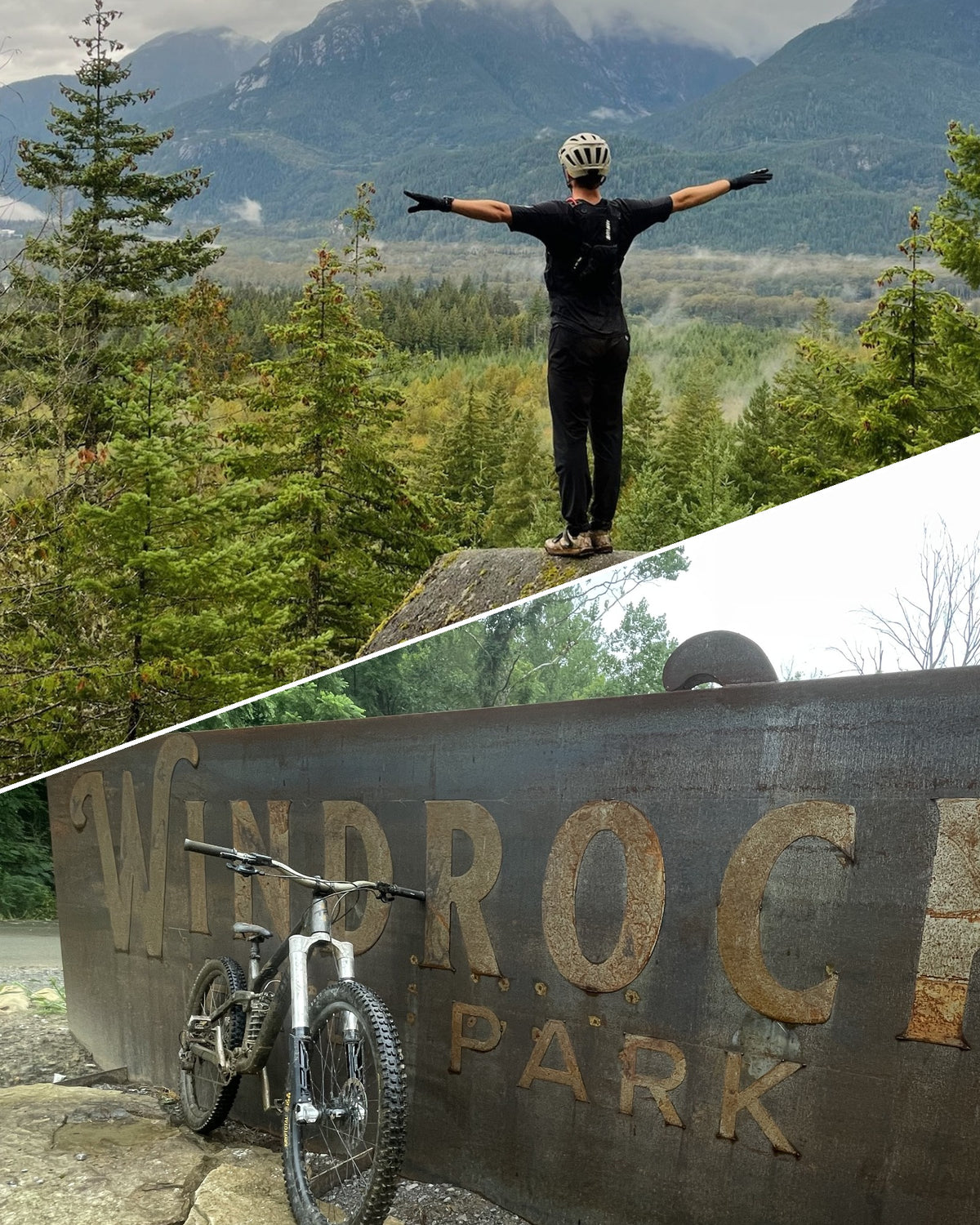
At Cane Creek, we’re fortunate to have some of North America’s most challenging riding right out our back door here in Western North Carolina. We’re home to the tallest mountains east of the Rockies and have multiple renowned downhill bike parks close by. Much of the testing and development work was done at Windrock Bike Park in East Tennessee (now owned and operated by DH legend Aaron Gwin) as well as our own local park, Ride Rock Creek, which hosted the USA Pro Downhill National Championships for the last two years.
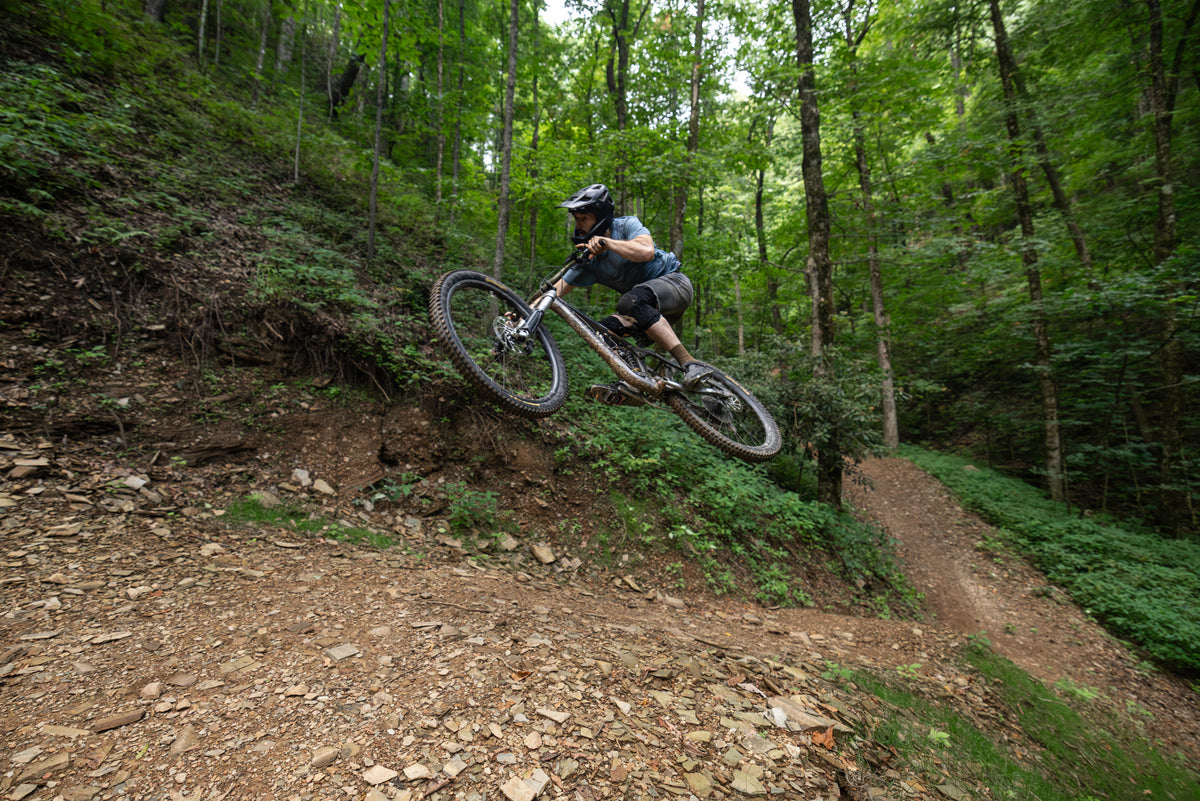
The fork may work well in our backyard, but we also had to know how well it fared in different environments. The true testing ground for us was the Pacific Northwest. In the fall of 2025, our senior design engineer and product marketing manager did a test trip that spanned from Bellingham, WA to Vancouver, Squamish, and Whistler, BC. These zones feature some of the steepest and most demanding mountain biking anywhere in the world and were a perfect place to test the torsional stiffness, traction, and confidence of our fork. Here, we linked up with local professional riders and industry veterans to get feedback on the fork’s performance. We rode legendary slab trails in Squamish and pushed the fork hard at the Whistler Bike Park. All the while, confident and pleasantly surprised in Invert Enduro’s ability to hold a line and not wander or twist under sustained heavy braking on wildly steep trails.
All in all, we’re incredibly pleased with where Invert Enduro has landed. No product is perfect, nor free from compromise, but we feel that Invert Enduro is going to give inverted mountain bike forks a more legitimate chance at success than anything that’s come before. We have dealers and distributors all over the world that will soon be offering demos, and we encourage you to get on one to see how it rides for yourself.
From the Southeast to British Columbia
At Cane Creek, we’re fortunate to have some of North America’s most challenging riding right out our back door here in Western North Carolina. We’re home to the tallest mountains east of the Rockies and have multiple renowned downhill bike parks close by. Much of the testing and development work was done at Windrock Bike Park in East Tennessee (now owned and operated by DH legend Aaron Gwin) as well as our own local park, Ride Rock Creek, which hosted the USA Pro Downhill National Championships for the last two years.
The fork may work well in our backyard, but we also had to know how well it fared in different environments. The true testing ground for us was the Pacific Northwest. In the fall of 2025, our senior design engineer and product marketing manager did a test trip that spanned from Bellingham, WA to Vancouver, Squamish, and Whistler, BC. These zones feature some of the steepest and most demanding mountain biking anywhere in the world and were a perfect place to test the torsional stiffness, traction, and confidence of our fork. Here, we linked up with local professional riders and industry veterans to get feedback on the fork’s performance. We rode legendary slab trails in Squamish and pushed the fork hard at the Whistler Bike Park. All the while, confident and pleasantly surprised in Invert Enduro’s ability to hold a line and not wander or twist under sustained heavy braking on wildly steep trails.
All in all, we’re incredibly pleased with where Invert Enduro has landed. No product is perfect, nor free from compromise, but we feel that Invert Enduro is going to give inverted mountain bike forks a more legitimate chance at success than anything that’s come before. We have dealers and distributors all over the world that will soon be offering demos, and we encourage you to get on one to see how it rides for yourself.
Development Slideshow




* Invert Enduro with 15mm SquareLoc axle had 17% less deflection in an in-house torsional stiffness test than the Fox Podium with stock 20mm axle. Fox Podium is believed to be stiffest of current single crown offerings.