What I Actually Think
October 2026

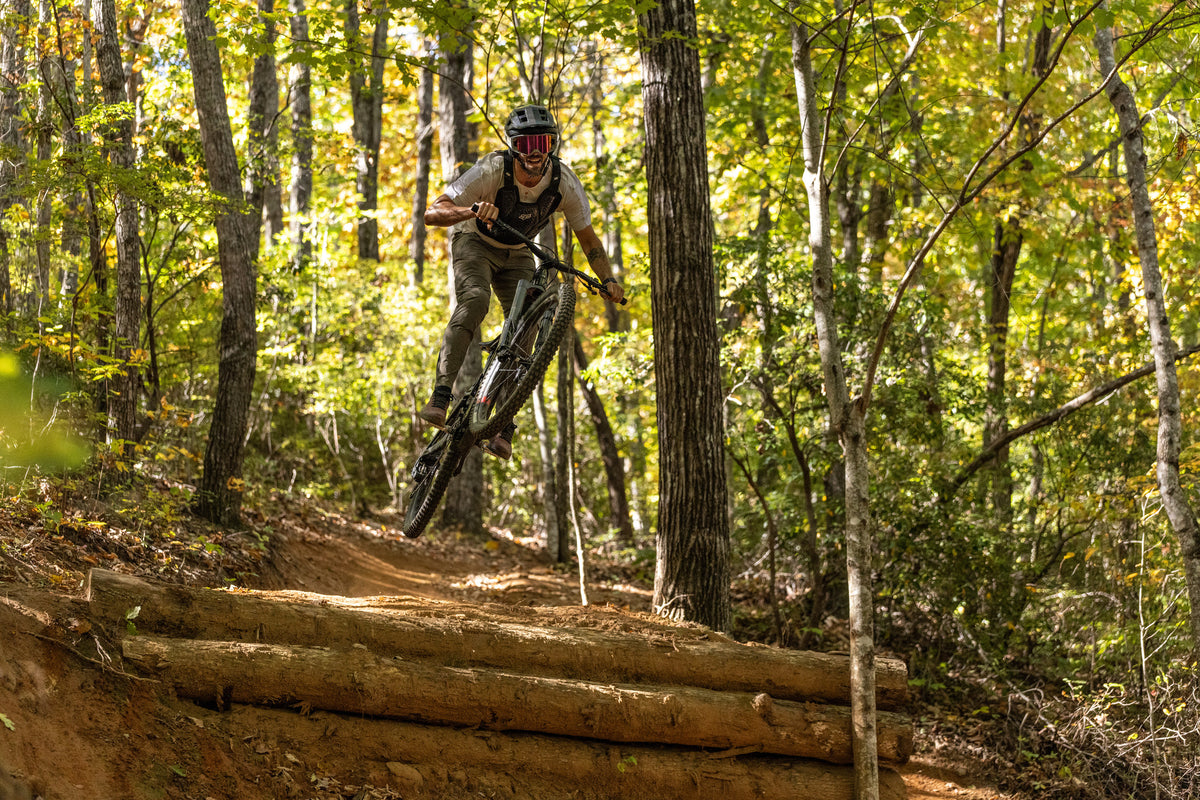
There is a spot on a local trail that I forget about every single time I ride it until it’s looking at me right down the barrel. It is not a feature that riders stop and session. There is no trail marker, no lip someone has groomed into shape. It is just a rooty left hand turn, the kind of thing that exists on every trail in Pisgah National Forest and registers as background noise until you are suddenly in the air above it, looking at a downhill right hander and a stretch of chunky, rooty terrain between you and where you hope your tires land.
I have ridden Trace Ridge more times than I can count. But the first time I hit that spot with the Invert Enduro installed, something was different. The confidence and trust I had built with this chassis was clear. A trail feature I normally soaked up with my suspension and body, I just pulled up on. The harsh impact upon landing, the inevitable tire deflection in such a rooty landing, the feeling of "Oh Shit" never came. My tires made contact with the ground and I just kept rolling, with even more speed. This was it. This was the moment I knew this fork could handle anything my riding could throw at it.
That moment is the clearest way I know how to explain what over 200 hours on this fork has taught me.
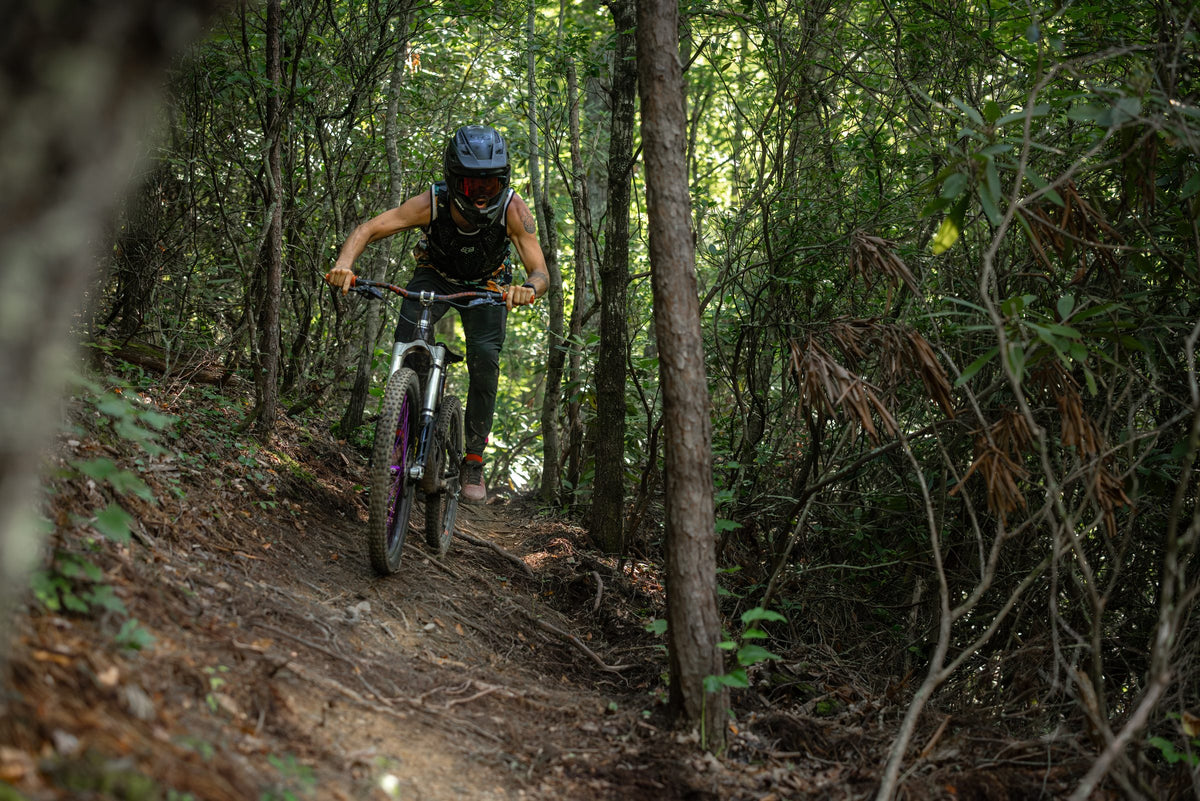
I ride a lot. Like, a lot a lot. In the rain, in the heat, and in the cold, and sometimes snowy, dark of winter nights. I am Cane Creek's Brand Marketing Manager, and it is technically my job to speak in hyperbole. Personally, I am not one for waxing poetically about feelings or products. If I truly believe in something, I prefer to let it do the speaking for itself. Sometimes though, a product's visibility at launch comes down to words, and this is one of those times.
One June night, I realized I had surpassed 200 hours of ride time on my Invert Enduro. I am not a professional rider. I consider myself a remarkably average mountain biker who has the good fortune of working for a cycling company in Fletcher, NC, with Pisgah National Forest essentially in the backyard. I am also probably my own harshest critic, which made being the featured rider in the launch video one of the more quietly stressful experiences of my career. Two days of filming, and I was exhausted by the end of it. The fork was not.
My involvement spans countless meetings, innumerable brainstorming sessions, tons of notetaking, and three prototype chassis. I rode the first chassis in the summer of 2025, logging around 40 hours across WildSide Bike Park and Windrock Bike Park in Tennessee, and countless miles in Pisgah. The second chassis I put roughly 10 hours on during launch video filming in October at Ride Rock Creek. When the third chassis landed in February 2026, forks were handed off between myself and three coworkers, I knew we were getting close. It was time to put in some real miles.
This piece is about my first 200 hours on that third chassis. By the time I finished writing and editing this, I’m floating around 250 hours on the same fork, still riding it as much as I can. These are not hours spread across three different builds. They are hours on one chassis, one ongoing relationship with a piece of suspension, and that distinction matters. All three chassis helped shape what this fork is now that it’s starting to show up in shops, on doorsteps, and installed on bikes across the world.


Imagine this: it is the start of my second week at Cane Creek, and I am in a meeting with the director of marketing, Jenna Toney, and the director of product, Todd Ford. I was just told I am going to Tennessee to test a new inverted fork we had just started developing. A fork I had only just recently seen a sneak preview of on Pinkbike during their Sea Otter coverage. Seven days later I am on the road.
WildSide is a well-built intermediate park with a solid mix of flow trails, jump lines, and intermediate technical terrain. A good place to start learning the fork's character without the terrain overwhelming the data. Windrock, 90 minutes north, is a different animal entirely. Raw, rocky, and unforgiving in the ways that expose a suspension product quickly. Between the two parks on that first chassis, we were testing various axle configurations, covered in depth by the article here.
When the test trips wrapped, I was not asked to reinstall my personal fork. I was fortunate enough to keep running the first chassis for a few more weeks around Pisgah. I had just moved back down from New England, frothing to ride my favorite trails again. Eventually I had to give it back. New parts and sub-assemblies were being designed, aesthetics being decided, engineering changes being planned.
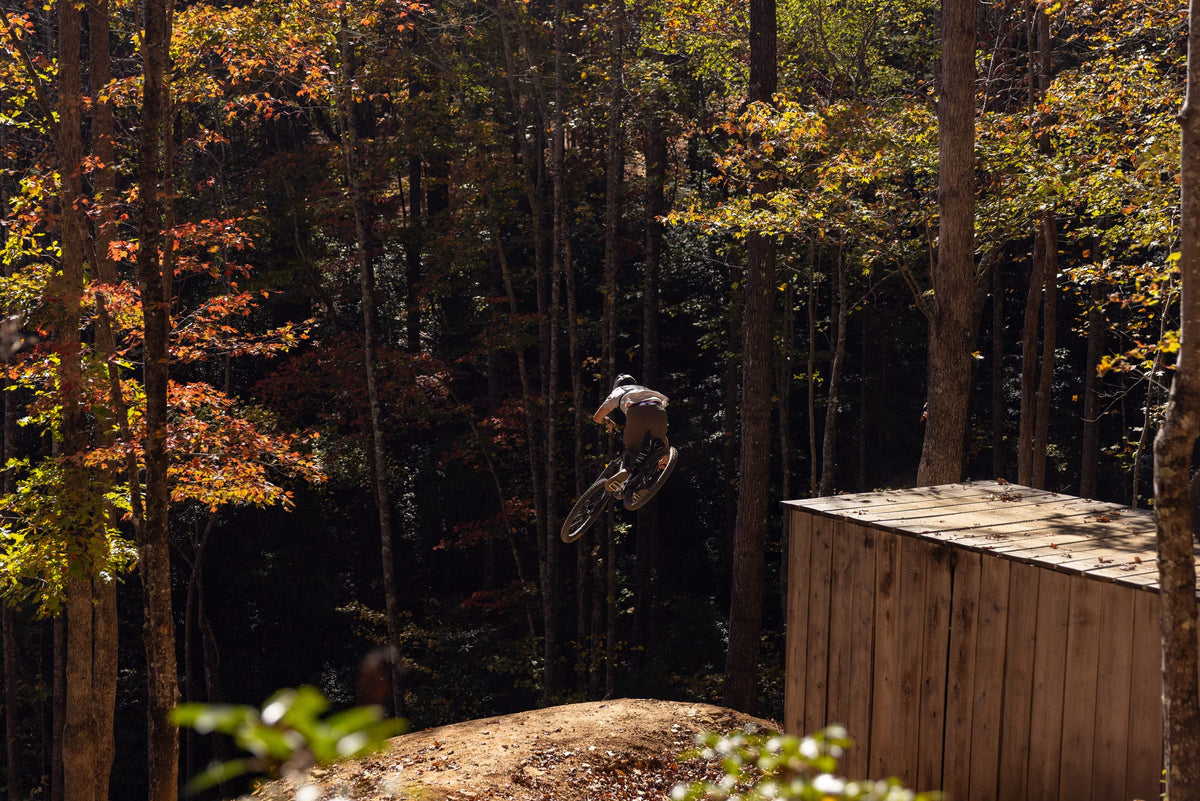
After a couple months of deliberation, it was time to film the launch video. Santa Cruz Bicycles was kind enough to loan me their brand new Bullit for filming. By the time the second chassis was built and the Bullit was prepped, I had only managed a single shakedown pedal at Ride Kanuga before lights, camera, action. No real warmup, no real prep. I was in it. With some minor tweaks and adjustments, the second chassis felt even better than the first in no time. I was going as fast as I could, section by section at Ride Rock Creek. Hike up, ride down, over and over. Filming is more than just a day out on the bike, and by the end I could barely muster the energy to keep going. The fork, on the other hand, didn’t care how exhausted I was.


Enter February, the end of winter in Pisgah. Brandon Blakely, the Senior Design Engineer at Cane Creek, handed off four forks, one of them to me. Final production samples. Time for real, meaningful notes. Feedback that would direct the final iteration before production. I rode every chance I could. Big days at bike parks, stacking miles in the forest on rough singletrack, and chill evening rides with my dog, Bennett.


To be transparent, my chassis highlighted some changes that needed to be made. Each issue, though minimal, directed changes in the production models being built as I wrote this.
From my very first ride on the third chassis, I saw the light. I had heard the hype about upside down suspension before, having spent time on the old Manitou Dorado, but that feels like ages ago. The feedback in my hands and body since day one has been minimal in the best way possible.
To say this fork has been confidence inspiring is an understatement. I am having as much fun as ever on my bike. My after-work rides, though often the same loop, are just as exciting and rewarding as they were when I first moved back down here. I find myself chasing speed, steeps, and airtime all on the same ride. Getting creative with line choice, trying to gap from here to there, taking the inside line on something I normally would have taken wide. I gained so much confidence and fitness that I entered my very first endurance race in May.
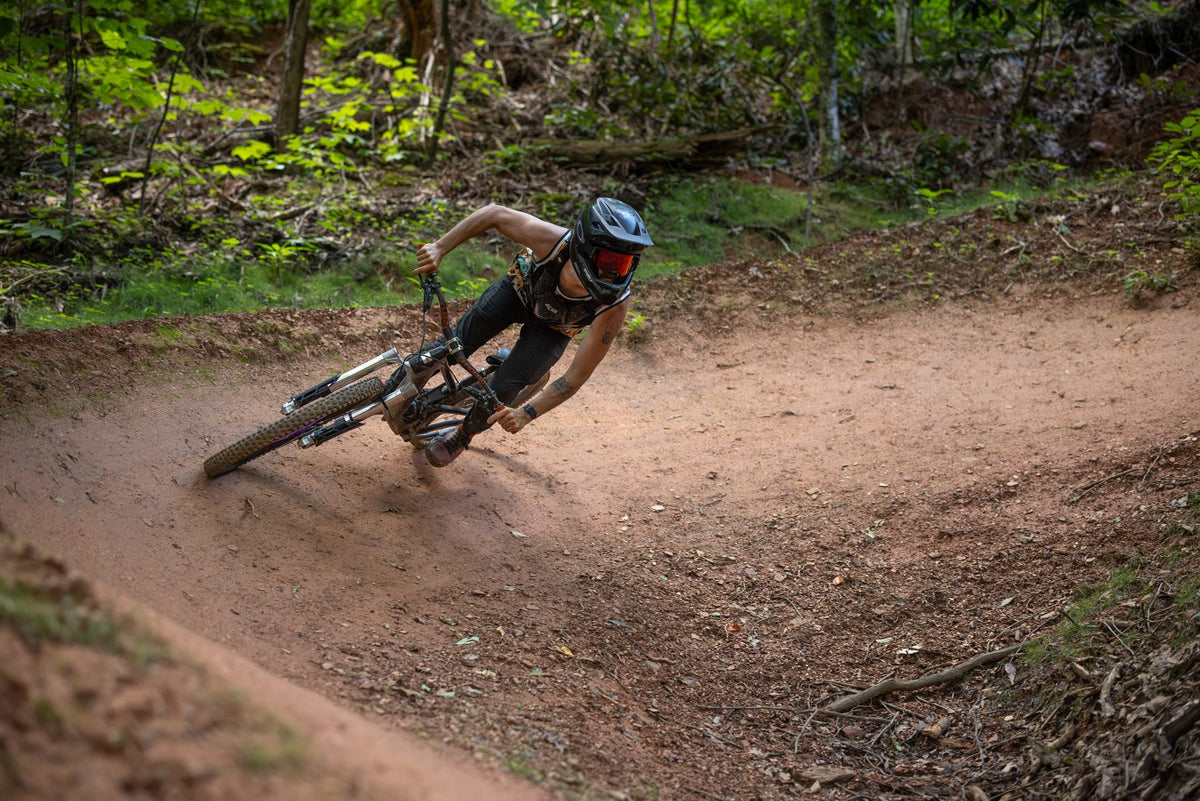
If you are not familiar with PMBAR, it is an endurance adventure race through Pisgah National Forest where riders navigate to various checkpoints. It can range anywhere between 60 and 100 miles and 6,000 to 13,000 feet of elevation gain depending on the route. The race starts at 8am, with a finishing cutoff time of 10pm. The fastest finishers are often on 120mm travel XC bikes. Yours truly did it on a 170mm Santa Cruz Nomad with the Invert Enduro installed. My partner and I finished in just over 12 hours, covering around 75 miles and 11,000 feet of climbing.
I was tired. I was a shell of a human. I could barely pedal another mile. But the fork? The fork was comfortable enough for me to hold on as I descended into the finish, a corral of fellow riders cheering on every finisher. It is one thing to ride a new product when your body is fresh and agile. It is a whole other beast to ride something when your tank is completely empty. The Invert Enduro is compliant enough that my exhausted, fully depleted body was still able to hold on and enjoy the ride.
That is exactly the kind of riding a weekend demo will never show you. A demo tells you how a fork feels when you are warmed up, dialed in, and paying attention. PMBAR told me how the Invert Enduro feels and performs when I have nothing left. When I cannot attack the downhills the way I normally would. When survival mode has quietly replaced trail instinct. The fork was never the problem. It just kept doing its job, absorbing what the trail threw at me, keeping me moving forward without asking anything of me in return.
During this testing period, we tracked mileage, hours, and elevation gain. Like the data-dork I am, I logged every ride on Strava. I want to be careful about overstating what that data means, because Strava times are not scientific and GPS accuracy varies. But on trails I have ridden for years, trails I know intimately and have logged dozens of efforts on, I kept getting my fastest recorded times on the Invert Enduro. Not occasionally. Consistently.
I am not claiming the fork made me faster in any absolute, measurable sense. What I am saying is that the pattern across familiar trails suggests a level of comfort and confidence that translated into how I was actually moving through terrain. When I stopped bracing for impact and started trusting my setup, something shifted. The Strava numbers reflected that shift, even if they are somewhat unreliable.
I have let a handful of close friends take a lap or two on the Invert Enduro at local bike parks. The response is always some version of the same thing: "It felt like nothing."
That sounds like faint praise until you understand what they mean. The trail feedback their hands were braced for never showed up. The fork absorbed information quietly, without passing it up through the bike and into their body. They finished the laps feeling unexpectedly composed, and were not entirely sure why.
That composed, confident feeling is what I would call the fork's character. It inspires confidence not by making the trail easier, but by making you feel more capable on it. The moves you were considering but not committing to become the moves you start making. That root-riddled corner gap on Trace Ridge went from something I rarely considered to something I now look forward to. That shift is not nothing.
I am not a set-it-and-forget-it person with suspension. I adjust for temperature swings, trail type, whether I am chasing high speed jumps or steep technical terrain. Wrapping my head around what each click of adjustment does on the Invert Enduro, and dialing it to each environment, became part of the experience. WildSide, Windrock, and Pisgah are three very different places, and the fork translated well across all of them once I understood its language. That tunability is a feature, not a footnote.
The 200 hour benchmark matters because it represents real variety. Bike parks and endurance races. Fresh legs and empty ones. Pisgah in every condition it offers. One chassis, ridden continuously from February 2026 forward, still going.
The Invert Enduro has changed the way I ride certain sections of trail. It has made me more confident in the air and more composed on the landing. It has held up across conditions I would not have chosen to test a fork in if I had the option.
I am not a professional. I am a person who rides a lot, works for the company that makes this fork, and has spent more time on this specific chassis than anyone else. Take that for what it is worth. But after 140 hours, I am still looking forward to the next ride.
That is the only review that actually matters to me.

By The Numbers
Feb 19 – Oct 21Mileage
1,900 miles
Hours
400hrs
Ascent
263,000’
Descent
350,000’