
Biking With Back Pain: Does It Help or Hurt?
Published: May 2026 · 8 min read
Biking with back pain is usually one of two situations: you already have back pain and you are wondering whether riding will make it better or worse, or you ride regularly and your back has started to act up. Different problems, different answers — and most articles online treat them as the same thing.
This guide covers both honestly. Cycling can ease lower back pain, and it can also cause or worsen it. Which way it goes depends on specific, fixable factors — your condition, your bike setup, and how you ride. Knowing the difference is the difference between riding being part of the solution and riding being part of the problem.
The short version
Biking with back pain can go either way. For most non-specific lower back pain — the kind from sitting, weak core, or general tension — cycling helps. For specific conditions like an acute disc herniation or active sciatica, it often does not.
When riding causes back pain, the culprit is almost always one of four things: sustained spinal flexion from a too-aggressive position, a saddle that is too high or tilted wrong, an overlong reach, or vibration accumulating over hours of rough terrain.
Fix fit first. Drop tire pressure. If your back is still wrecked after a long gravel day, isolate the seatpost — that is where most of the remaining vibration enters your spine.
Does Biking Help With Back Pain?
For most people with general, non-specific lower back pain — the kind caused by too much sitting, weak core muscles, or muscle tension — cycling is genuinely useful. It is low-impact, which means it loads the spine far less than running or high-intensity training. It moves the hips through a controlled, repetitive range. And the rhythmic pedaling engages the small stabilizing muscles along the spine that are difficult to train any other way.
Riders often report feeling looser after a ride, and that is not just perception. Cycling improves circulation to spinal tissues, reduces lumbar muscle tension, and relieves the disc compression that builds up after hours of static sitting. For desk workers — which is most people with chronic low-grade back pain — getting on a bike and moving is almost always better than staying sedentary.
That said, cycling does not strengthen the core the way deadlifts or targeted exercises do. The bike supports a significant portion of your body weight, which means your deep stabilizing muscles are not fully loaded. If your back pain is partly caused by core weakness, cycling helps but it does not solve the problem on its own. A 2017 review of cyclists with and without lower back pain found that the painful group consistently showed core muscle activation imbalances and back extensor endurance deficits — suggesting cycling alone does not build the stability the spine actually needs.
Is Biking OK With Lower Back Pain? It Depends on the Cause
The honest answer: it depends on what is causing your back pain. Cycling is not one-size-fits-all, and some conditions respond very differently to the forward-leaning position on a bike. The table below covers the most common situations. If your pain has a specific diagnosis, talk to your doctor or physio before committing to a training plan.
| Condition | How Cycling Typically Feels | First Move |
|---|---|---|
| Non-specific muscle tension | Usually helpful — circulation, mobility, and gentle decompression | Just ride. Watch duration and fit |
| Lumbar spinal stenosis | Often comfortable — flexion opens the spinal canal | Drop-bar or forward position is generally fine |
| Degenerative disc disease | Variable — more upright tends to feel better | Avoid aggressive flexion; raise the bars |
| Acute disc herniation or sciatica | Often aggravated by sustained sitting | Hold off; get clearance from a clinician |
| Sacroiliac dysfunction | Variable — sensitive to saddle height and hip rocking | Get a fit before adding miles |
| Post-injury or recent surgery | Depends entirely on recovery stage | Follow your clinician's protocol |
Lumbar spinal stenosis typically feels better in a forward-leaning position. The flexed spine opens the canal slightly, which reduces nerve compression. Many people with stenosis find cycling comfortable when other activities are painful.
Lumbar degenerative disc disease often responds better to a more upright position. Aggressive forward flexion can increase disc pressure, so a relaxed gravel or endurance setup tends to work better than an aggressive road position.
Acute disc herniation or active sciatica is a different situation. If sitting itself is painful — which it often is during a flare — adding the spinal flexion of cycling can increase nerve irritation. Short, gentle movement is usually better than sustained seated exercise here, and rehabilitation should come before longer rides.
General muscle tension and non-specific lower back pain responds well to cycling in most cases — as long as position, pressure, and bike fit are addressed.

When Biking Causes or Worsens Back Pain
Lower back pain is the most common overuse complaint in cycling. Studies consistently show more than half of regular cyclists report it, and the more miles you ride, the higher the risk. A 2010 study of recreational cyclists found that those riding more than 100 miles per week were 3.6 times more likely to develop lower back pain than those riding less.
That does not mean riding less is the only answer. It means how you ride matters. Most cycling-related back pain comes from a combination of these factors:
Sustained spinal flexion
Holding a forward-leaning position for hours places the lumbar spine in sustained flexion — a posture the spine tolerates in the short term but that becomes problematic over a long ride, especially when muscles fatigue. When your spinal erectors can no longer hold the position, the load transfers to passive structures: discs, ligaments, and joints not designed to carry it for extended periods. This is why back pain from cycling so often arrives gradually — fine for 30 minutes, noticeable at 90.
Reach and bar height
A cockpit that is too long or too low forces you to overreach, flattening and overloading the lumbar curve. This is one of the most reliable ways to develop lower back pain on a bike — and one of the most reliably fixed by shortening the stem or raising the bars.
Saddle height
A saddle that is too high causes hip rocking. That side-to-side motion puts repeated lateral stress on the lower back muscles and sacroiliac joint. A saddle that is too low keeps the hip flexors compressed and shortened throughout the pedal stroke, which tilts the pelvis and loads the lumbar spine from a different angle.
Vibration
This is the factor most cycling articles underweight, and it matters more on gravel than anywhere else. Whole-body vibration increases the risk of lower back pain and spinal injury — every surface irregularity sends a load pulse into the pelvis and lumbar spine. Over a four-hour gravel ride, those pulses accumulate into something the body notices, even when fit and position are otherwise good.
Physiotherapist and bike fitter Phil Burt has described how a saddle can transfer significant vibration into the pelvis and lower back. Over time, that vibration fatigues the muscles trying to absorb it. When those muscles stop absorbing effectively, the load goes straight into the nerves around your vertebrae.
Why Gravel Riding Is Harder on Your Back Than Road
Gravel riders face everything road cyclists face — sustained flexion, reach, saddle position — plus a vibration load that road cycling does not generate at the same intensity or frequency. Washboard, loose chatter, and chunky terrain create a constant stream of small impacts that road surfaces simply do not. The body's response to that input over hours is progressive muscle fatigue and, eventually, pain.
This is not a reason to avoid gravel. It is a reason to set up your gravel bike specifically for the demands of the surface — which most riders do not do. Many gravel bikes are ridden at road bike pressures, with a rigid seatpost, and with the same stem length as a road setup. That combination amplifies every vibration input directly into the rider.
The practical fix has two parts: reduce the vibration entering the bike, and reduce the vibration reaching your body from the saddle up.
Tire pressure is the first lever, and the cheapest. Running pressure that is even slightly too high for your weight and terrain bounces the bike off rough surfaces instead of absorbing them. Dropping a few PSI can reduce the felt impact dramatically, especially in the lower back.
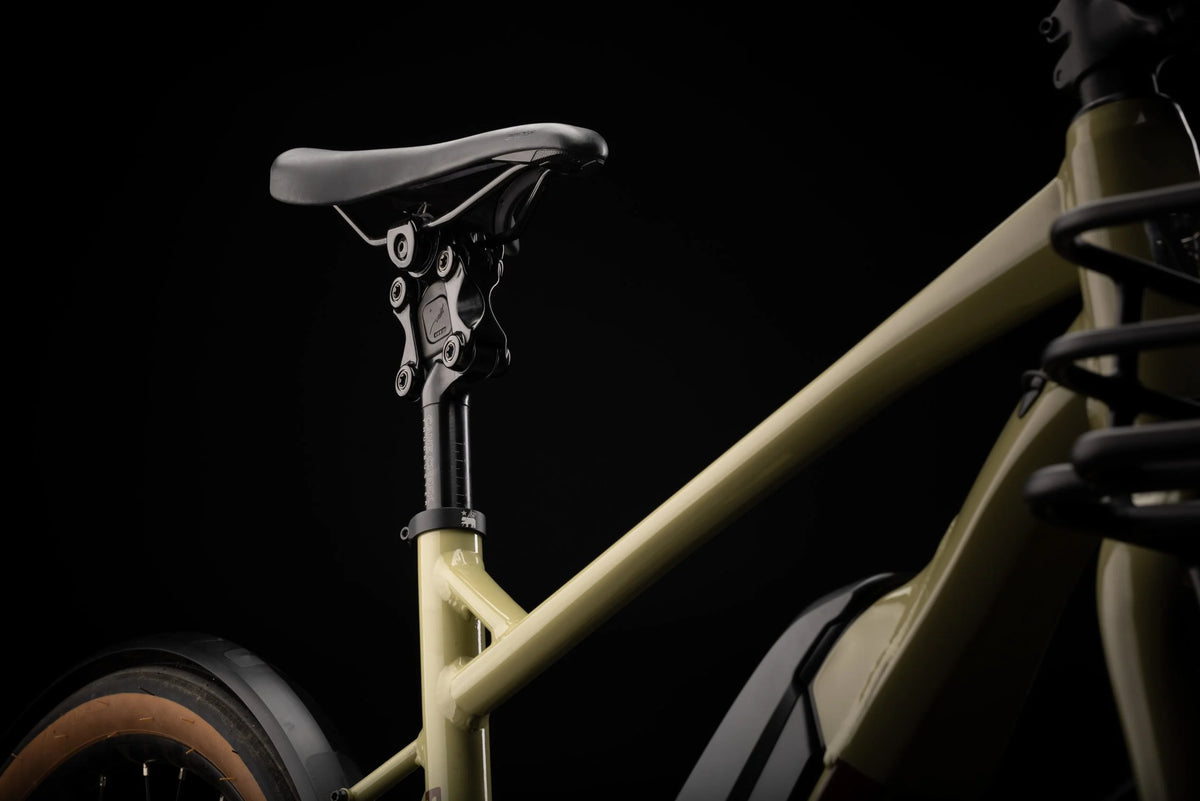
A suspension seatpost is the second. For riders who regularly finish long gravel days feeling wrecked in the lower back — even after fixing fit and tire pressure — isolating the seatpost from vibration addresses the remaining input directly. The Cane Creek eeSilk+ Suspension Seatpost is built for this: filtering high-frequency vibration and sharp hits so accumulated spinal load over a long ride is meaningfully reduced, without changing how the bike feels on smooth surfaces or climbs.
For bikepacking, commuter, and loaded cargo bikes, the Cane Creek Thudbuster uses a linkage-based design with more travel and tunable compliance, designed to take the edge off larger individual hits as well as sustained vibration. Which one is right depends less on which has more travel and more on the specific nature of your terrain, use-case, and how your back responds.
Additional reading on this topic: How to Make Gravel Riding More Comfortable
Practical Steps for Biking With Back Pain
Start shorter and build gradually
If you are returning to riding with existing back pain, duration in the saddle is the primary variable to manage. Start with short intervals — even 10 to 15 minutes — and build over weeks rather than jumping straight back to long rides. The pain-free threshold tends to extend as the supporting muscles strengthen, but trying to rush that process usually ends it early.
Ride more upright initially
A more upright position reduces lumbar flexion, which is particularly important when you are managing an existing complaint. If your bike allows it, raise the bars and shorten the stem to reduce the sustained forward bend that drives most cycling-related back pain. This is a short-term accommodation that may not be necessary once your back has settled, but it can make the difference between riding being helpful and riding making things worse.
Move on the bike
Sustained static posture is the enemy, whether in an office chair or on a saddle. Change hand positions regularly, sit up briefly, and stand out of the saddle on climbs to interrupt the sustained flexion load. Riders who treat every position change as an opportunity for their spine to reset tend to manage back pain far better over long rides.
Fix fit before buying anything
The majority of cycling-related lower back pain is position-related, not equipment-related. Before investing in new components, check the basics: saddle height, saddle tilt, reach, and bar height. A professional bike fit is worth the cost if you have been chasing back pain for a while without resolution — it removes the guesswork that keeps most riders cycling through the same problem for months.
Build core strength off the bike
Cycling does not adequately load the deep stabilizing muscles of the core — the muscles that protect the lumbar spine under sustained flexion. A simple routine of planks, dead bugs, and hip hinge patterns done consistently off the bike does more to prevent cycling-related back pain than almost any component change.
Warning Signs Worth Taking Seriously
Most cycling-related lower back pain is muscular and mechanical — uncomfortable but not dangerous, and responsive to the fixes above. Some symptoms warrant a conversation with a medical professional before you keep riding:
Pain that shoots down one or both legs, or that comes with numbness or tingling in the legs or feet, may suggest nerve involvement. Pain that is significantly worse in the morning and improves through the day, or that is not affected by position changes, may have a non-mechanical cause. Pain after a fall or impact that is severe or does not improve within a few days should be assessed. And any back pain that is progressively worsening over weeks, regardless of what you try, is worth looking at.
Frequently Asked Questions
Does biking help with back pain?
For most people with general, non-specific lower back pain, yes. Cycling is low-impact, engages spinal stabilizing muscles through gentle rhythmic movement, and reduces the lumbar tension that builds from prolonged sitting. It is not a complete solution — it does not load the core the way dedicated strength work does — but as regular movement, it is significantly better than staying sedentary.
Is biking OK with lower back pain?
In most cases, yes — with attention to duration, position, and fit. Short rides in an upright position are a reasonable starting point. Caution is warranted with acute disc herniation, active sciatica, or any condition where sitting itself is painful. When in doubt, a brief conversation with your doctor or physio costs far less than weeks of avoidable setback.
Why does my lower back hurt after cycling?
The most common causes are sustained spinal flexion from a position that is too aggressive, a saddle that is too high causing hip rocking, bars too far away overloading the lumbar spine, or vibration accumulation on rough surfaces. Most cases resolve with fit corrections and gradual load management. If pain persists after addressing these, a professional assessment is the logical next step.
Can I bike with a herniated disc?
It depends on the stage and severity. During an acute flare, when sitting itself increases pain, cycling typically aggravates symptoms because of the spinal flexion involved. Once symptoms have settled and a clinician has cleared you, short rides in a more upright position are usually well-tolerated and can be part of recovery. This is one situation where guidance from a physiotherapist matters more than general advice.
What is the best bike position for lower back pain?
A more upright position reduces lumbar flexion and is generally easier on a sensitive back. That usually means raising the handlebars with spacers, shortening the stem, or using a stem with more rise. The saddle should be set so your hips do not rock at the bottom of each pedal stroke. If you are buying a bike with back pain in mind, a gravel or endurance geometry is far easier to ride than a race-oriented road position.
Can I ride gravel with lower back pain?
Yes, but gravel adds a vibration load that road cycling does not, which makes setup more important. Tire pressure, saddle suspension, and cockpit reach all matter more on rough terrain because each one affects how much impact reaches the spine per hour of riding. Getting those variables right is the difference between gravel making your back better and making it worse.
Does a suspension seatpost help with back pain?
For riders dealing with vibration-driven back pain on rough surfaces, often yes. A suspension seatpost like the Cane Creek eeSilk+ or Thudbuster does not change how the bike feels on smooth roads or climbs, but on rough ground it noticeably reduces the impact reaching your pelvis and lower back. It will not fix back pain caused by poor fit or core weakness — those are separate problems — but it addresses the part driven by accumulated vibration, which is significant on long gravel days.
How long should I rest my back before cycling again?
For general muscle soreness or tension, a day or two of lighter activity is usually enough. For an acute flare of a known condition, it depends on the condition — this is where clinical guidance is more useful than general advice. The goal is to return to riding as soon as you can do so without the ride setting your recovery back, which is often sooner than people assume.